
Artificial intelligence in UK public procurement, 2022 to 2026
How public sector spending on AI has changed since the release of ChatGPT in 2022.
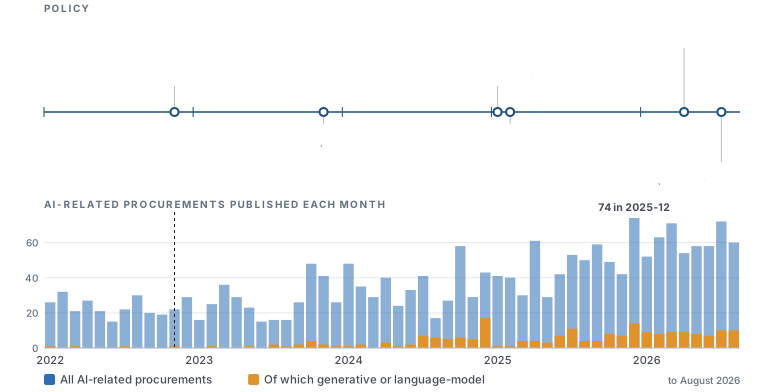
ChatGPT was released on 30 November 2022. In the four years since, artificial intelligence has moved from a research interest of a few departments to a standing commitment of government policy. Each step in Figure 0 carries a claim about buying: that the public sector will buy more AI, buy it from British companies, buy it more transparently, and save money by doing so.
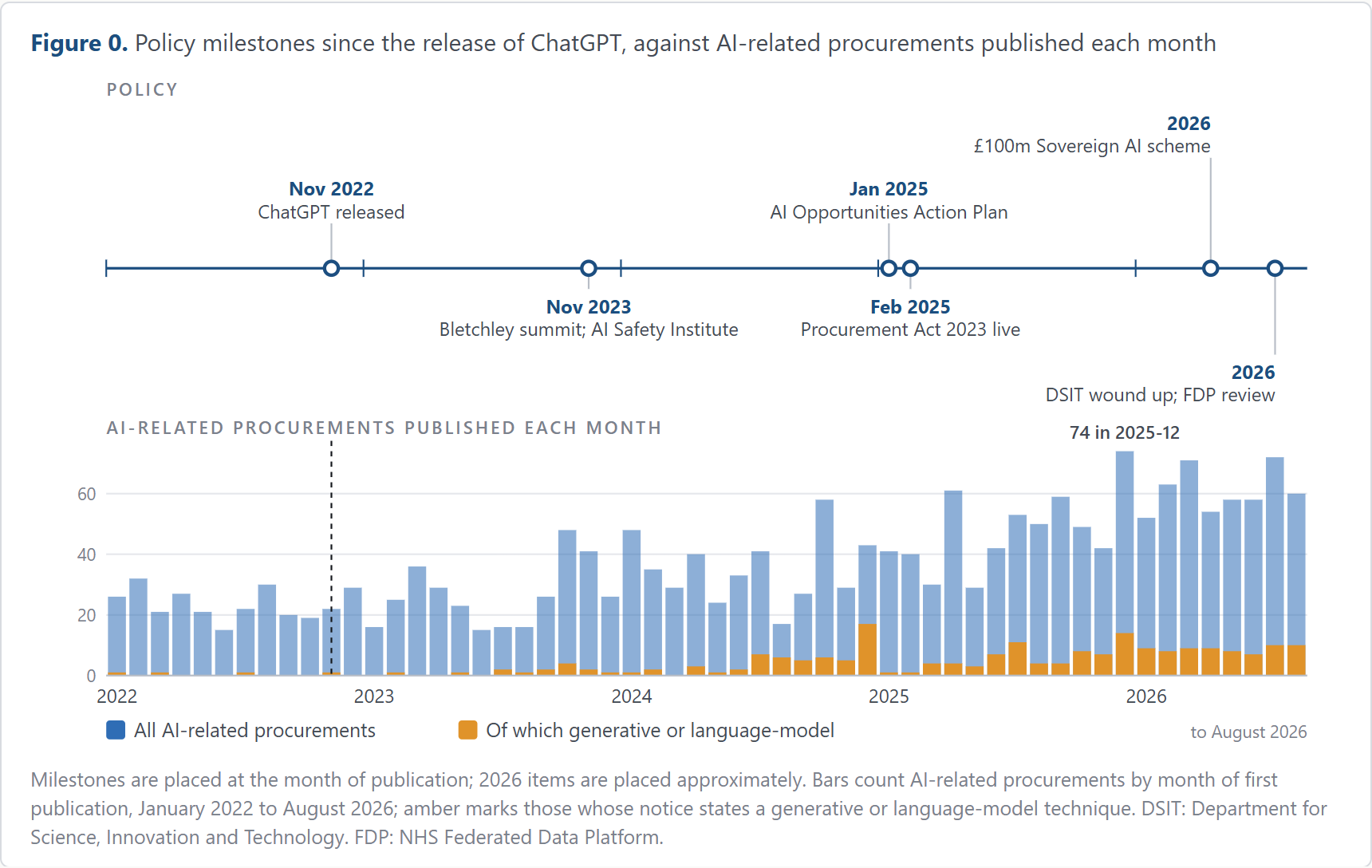
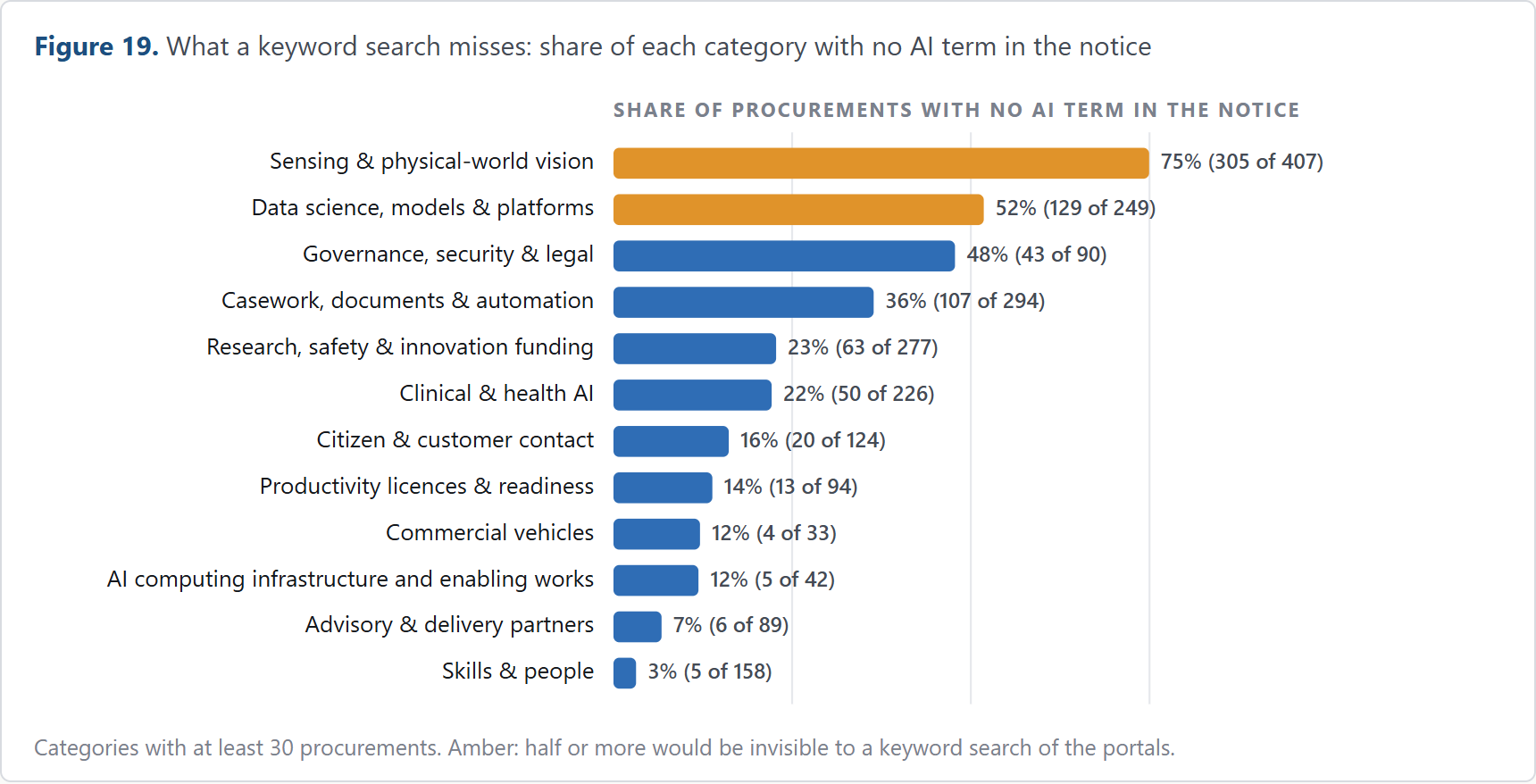
To date, the scale and nature of AI contracts awarded by UK public bodies has not been recorded. This includes information relating to their purpose, value, who bought them, and who won them. Existing figures instead measure neighbouring but distinct phenomena: the NAO has surveyed the central government about AI deployment and Tussell reports £5bn since 2018, a total dominated by keyword matching, missing many contracts that don’t contain these words. As a consequence, none read the whole record, nor do they apply a definition a reader can check or clearly categorise each contract.
Definition of AI procurement used in this report
A procurement is classed as AI-related when:
- the thing bought is, or depends on, a machine-learning, language-model, speech, vision or autonomy capability;
- AI is the subject of the work: research, training, governance, recruitment or funding its development; or
- the purchase provides computing for AI, or directly supports an AI computing facility through construction, advice, power, cooling or operation.
Everything a looser definition would sweep in, such as rules-based automation, data apprenticeships and software that merely carries an AI label, is reported separately as adjacent, so a reader who draws the line elsewhere can move it with one filter.
Data and methodology
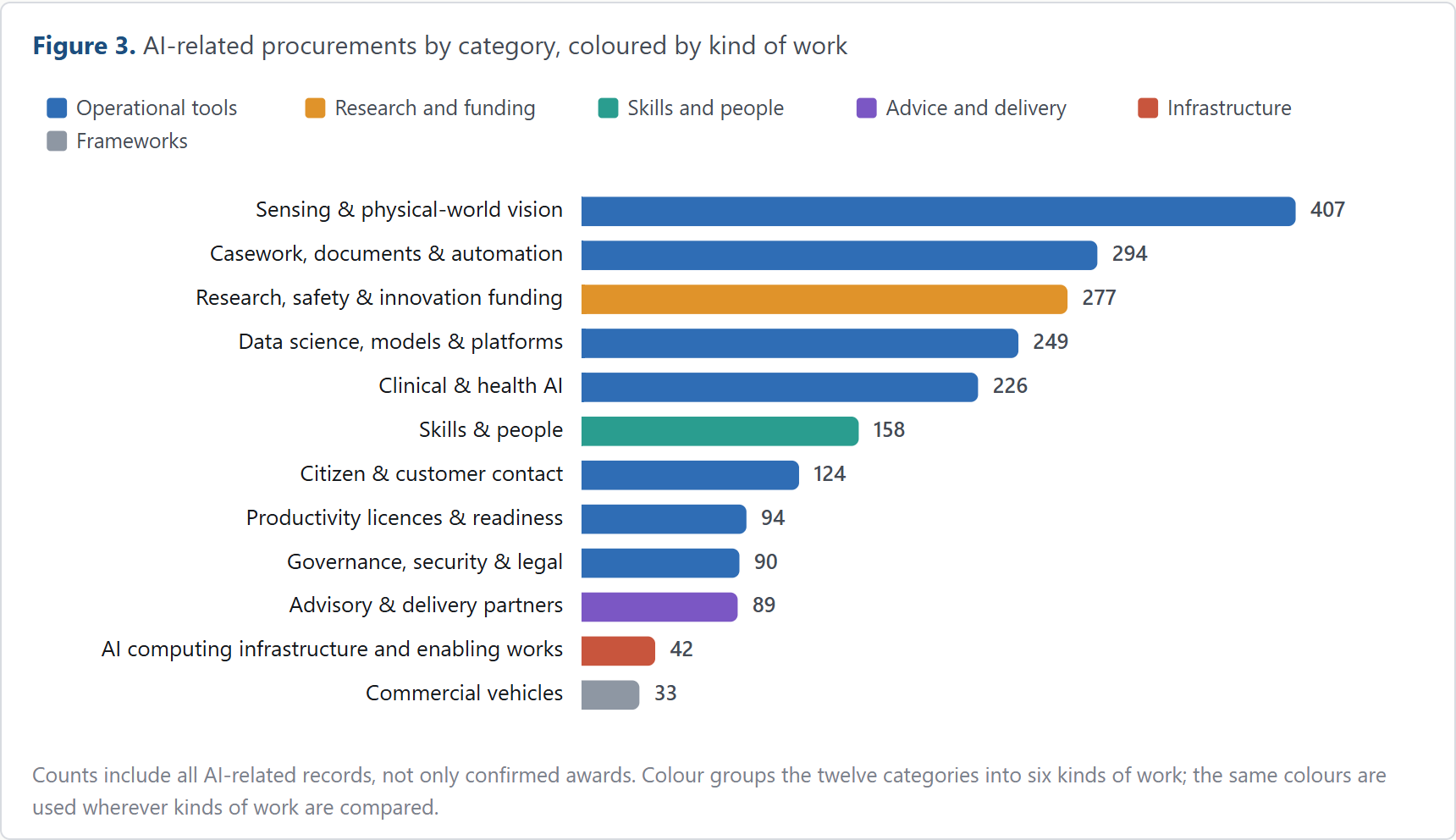
Public bodies do not buy "AI". They buy drones and dictation tools, chatbots and cancer-screening models, pothole cameras and policy studies. We described 44 such lines of work, grouped into twelve families, each with a definition of what it looks like in a contract notice. Those descriptions are what we searched for. Every procurement in the record was compared against every line, so a notice for "caseworker transcript tool" or "multi-modal traffic sensor" surfaced even though neither explicitly mentions AI.
Each candidate was then read in full by Claude Opus 5 under the fixed definition and a written rule set, and every AI verdict was read at least three times; boundary cases were ruled on by the author. A verdict does not just say yes or no. It records which line of work the contract belongs to, the technique where the notice states one (generative, predictive, vision or speech, autonomy), the buyer's sector, the commercial route, and a quoted evidence string from the notice with a link to its source.
That is what allows the report to say not only how much AI is being bought but what kind, by whom, from whom, and how fast generative AI is displacing the rest. The dataset is published under an open licence.
Every figure in this report is drawn from BidSkim's proprietary database of UK public procurement, built by collecting, cleaning and structuring the official record daily.
- Source
- every notice published on the four UK statutory portals, Find a Tender, Contracts Finder, Public Contracts Scotland and Sell2Wales, all released under the Open Government Licence. For this report, 874,032 notices first published between September 2021 and August 2026, grouped into 581,864 procurements.
- Unit
- the procurement, counted once and dated to its first notice, so that a tender, its award and any later modification are not counted multiple times
- Value
- the published value of awarded contracts, taken from the award notice. Framework ceilings, tenders with no award, and awards with no stated value are excluded rather than estimated, so every value figure is a minimum.
- Suppliers
- winners are matched to the Companies House register, including the register of persons with significant control, to establish whether a supplier is a UK company, a UK-headquartered multinational, or headquartered overseas or under foreign ownership; the supplier's own website settles the remainder.
1 Key findings
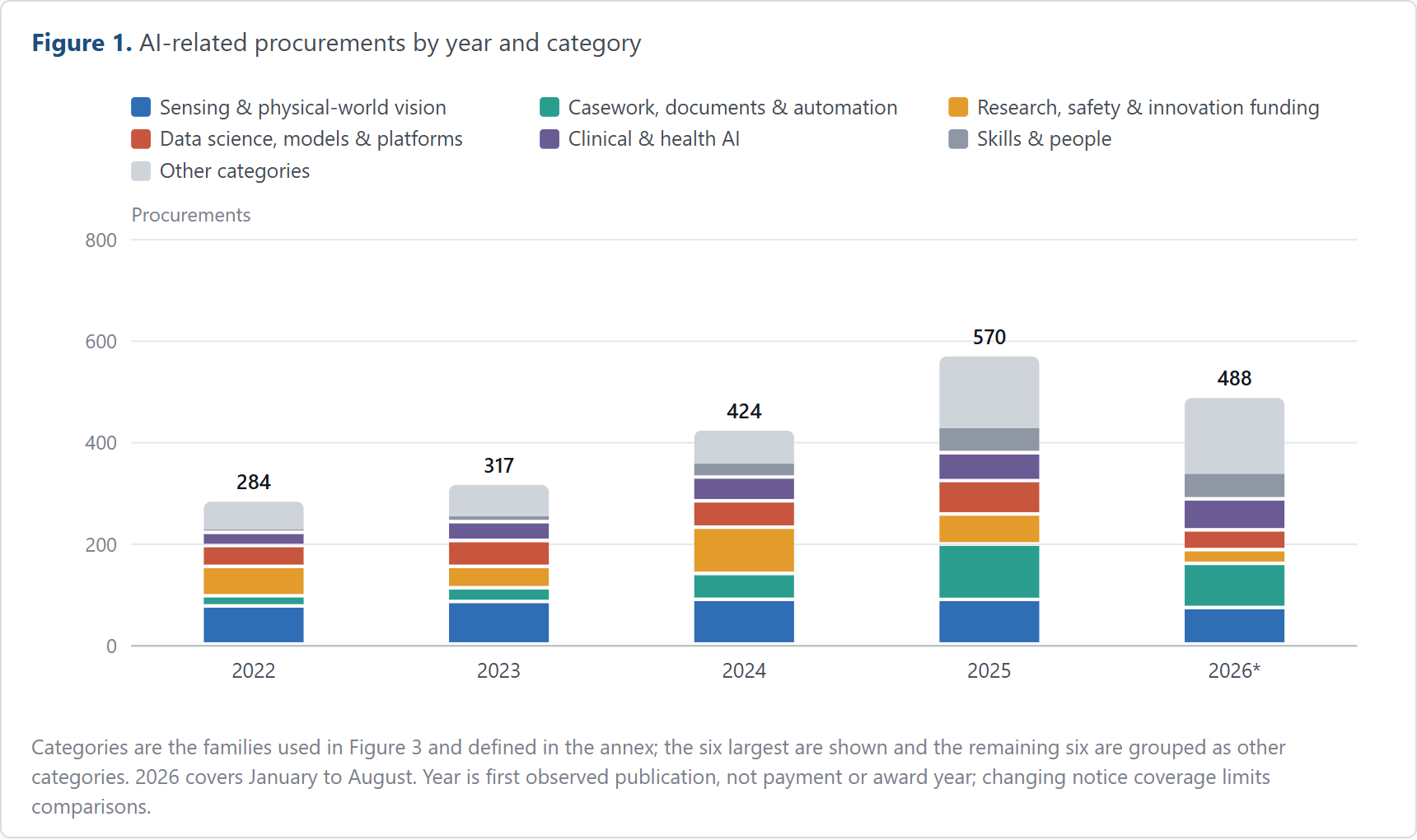
Public bodies are buying AI for everyday work: writing clinical notes, recording council casework, analysing images and supporting defence research. This study identifies 2,083 AI-related procurements across 616 buyers, with £1.84bn in published contract value. The market is broad, but the money is concentrated: four contracts account for 42.1% the total, while SMEs win many smaller awards.
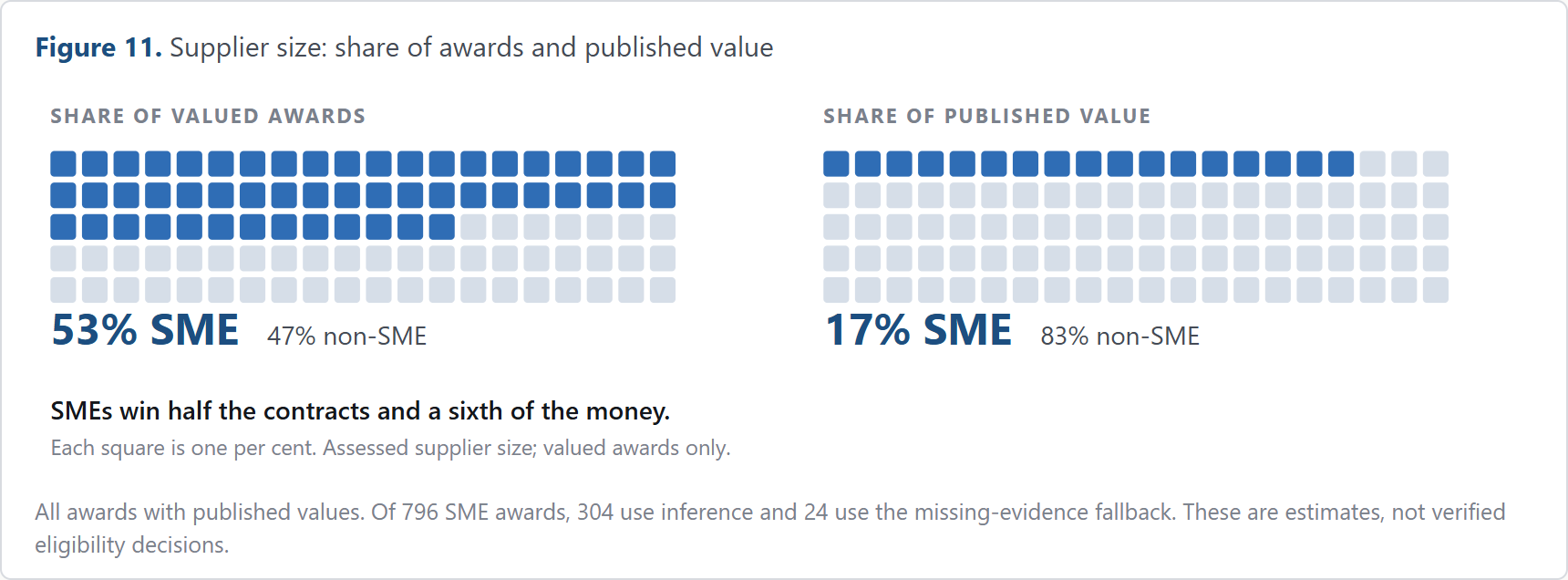
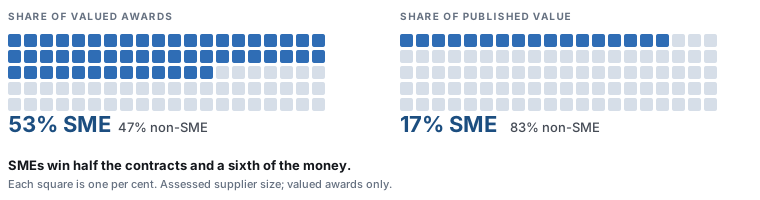
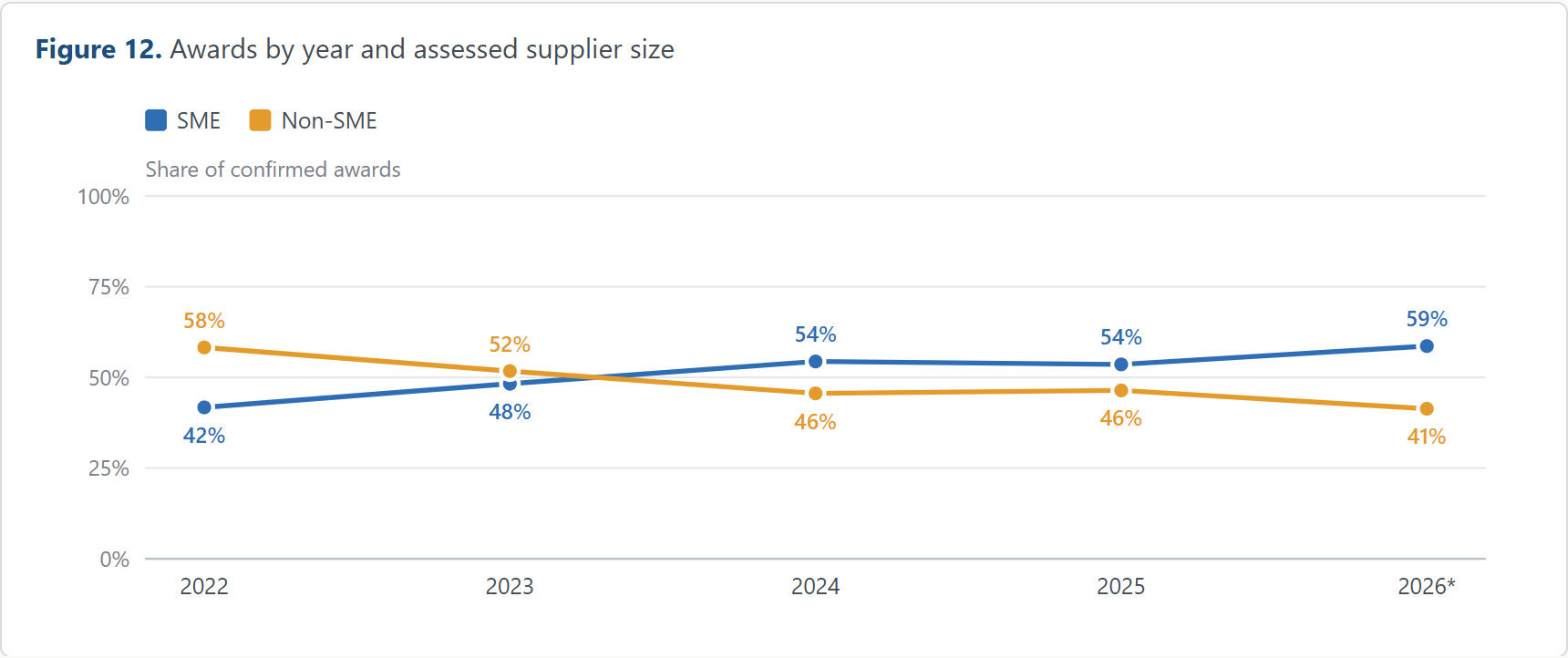
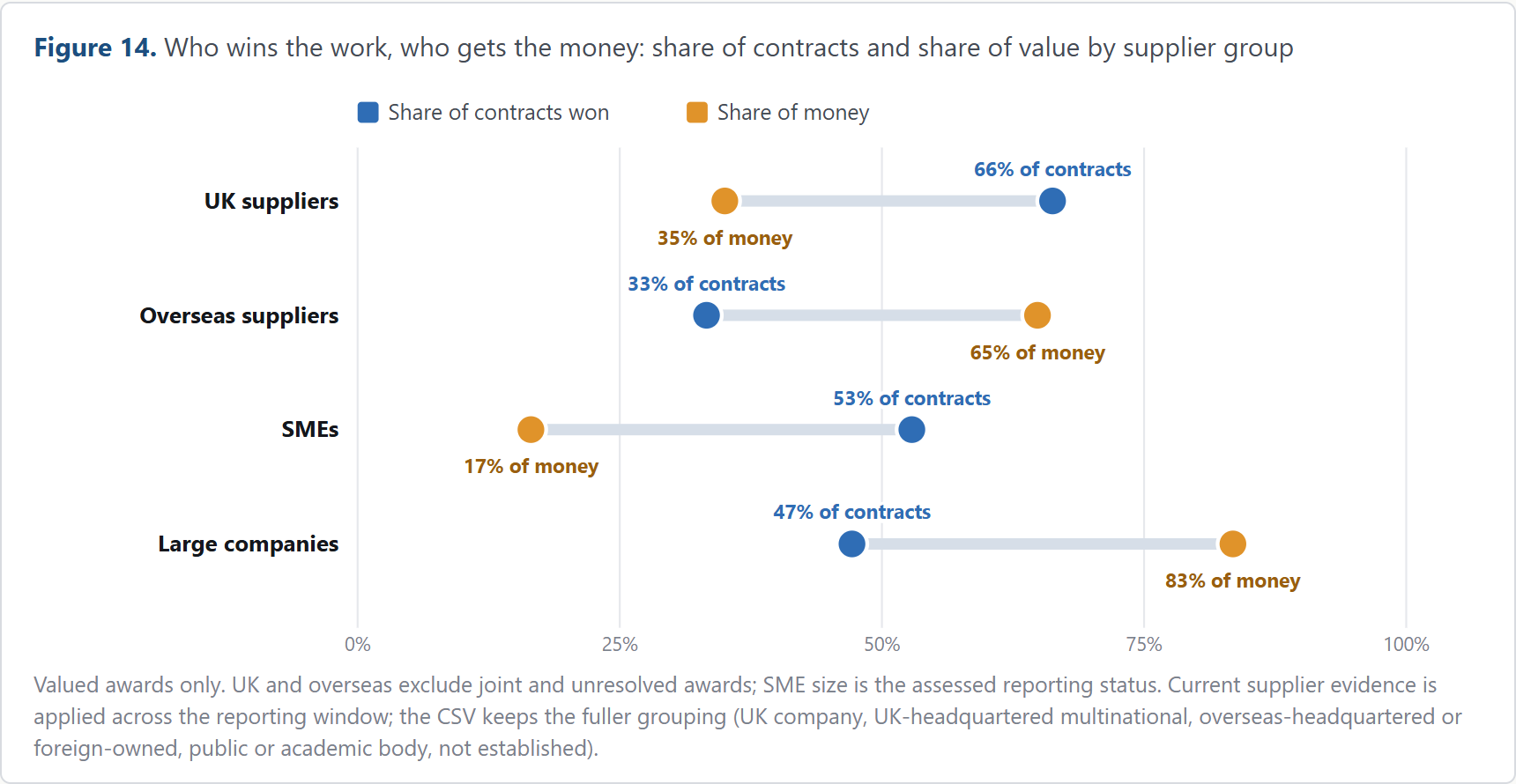
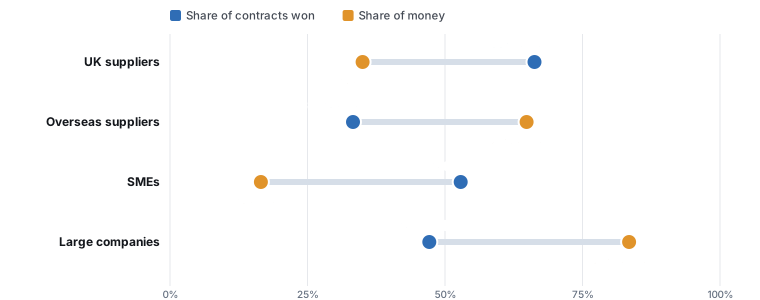
- Suppliers assessed as SMEs account for 53% of valued awards by count, but 17% of their value. Subsidiaries are assessed under their parent’s accounts when determining SME status. Figure 11.
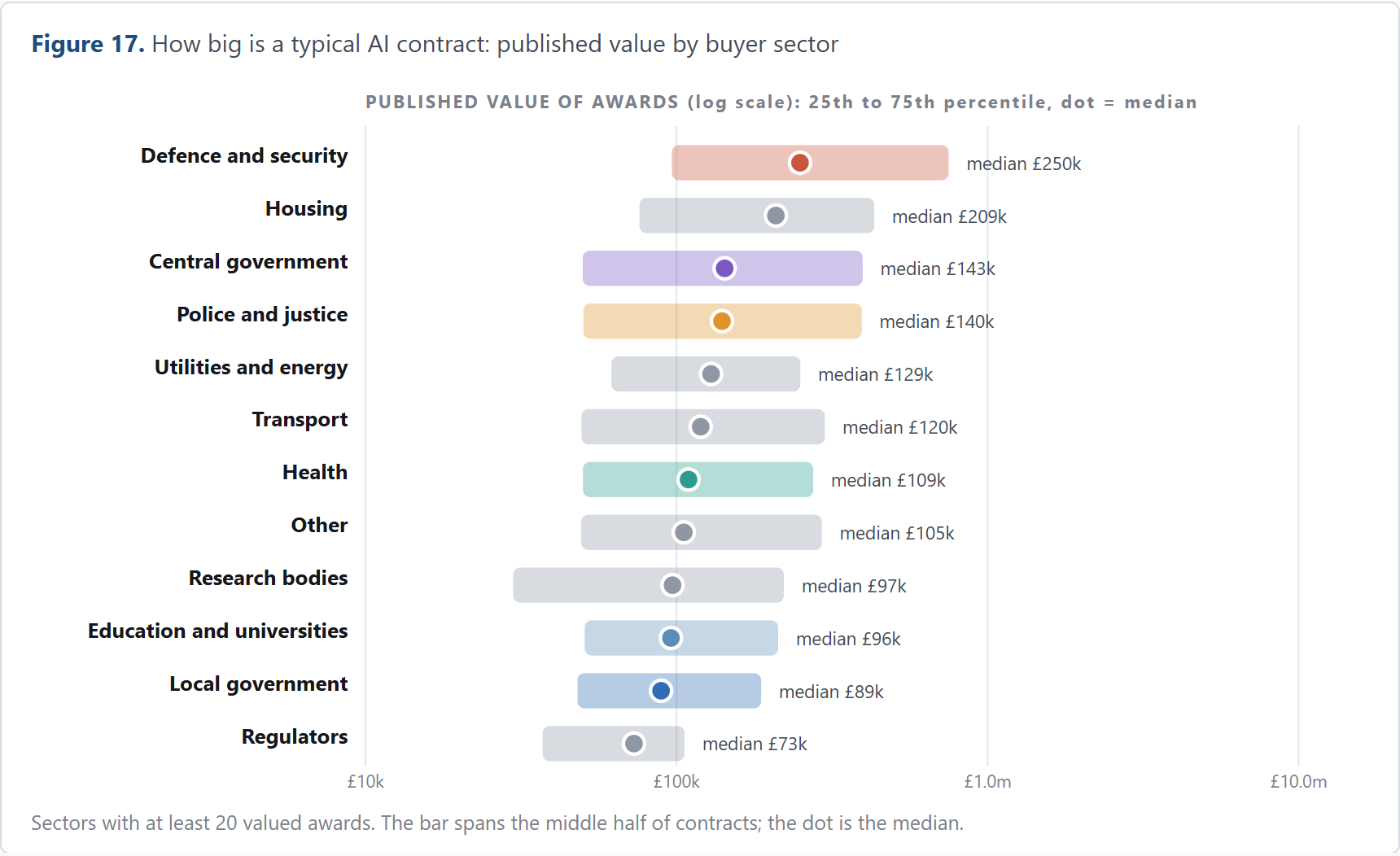
- Four contracts account for 42.1% of published value. At the other end, half of awards with published values are at or below £107k, and three quarters at or below £300k. Contract values and concentration.
- Overseas suppliers account for 33% of valued awards and 65% of value. The grouping includes UK subsidiaries of foreign-controlled companies. Figure 14.
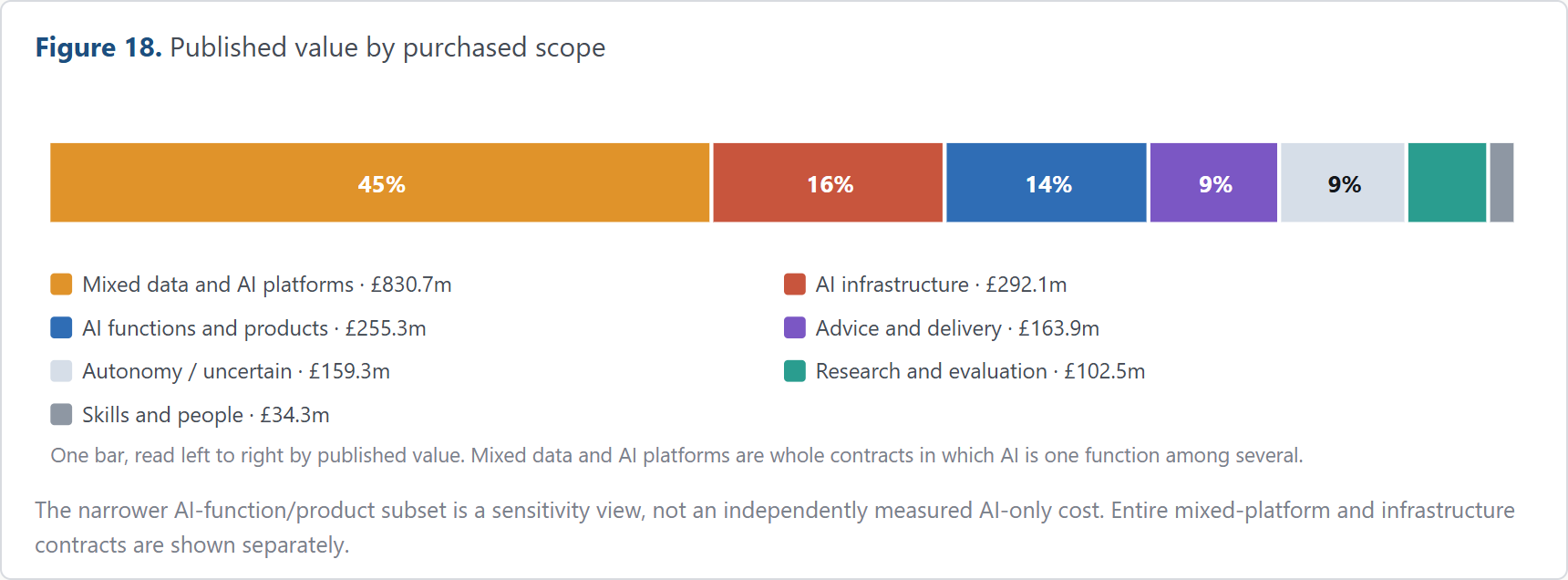
- AI infrastructure carries £292.1m in eligible award value. This includes £84.1m for data centres, site preparation, advice and other supporting work. Data centres and their supporting work.
One buying exercise, counted once even when several notices describe it, from the initial announcement through to award
The selected published amount in the award notice
An agreement setting the terms for future purchases. Its maximum value is excluded; individual contracts awarded through it can be counted.
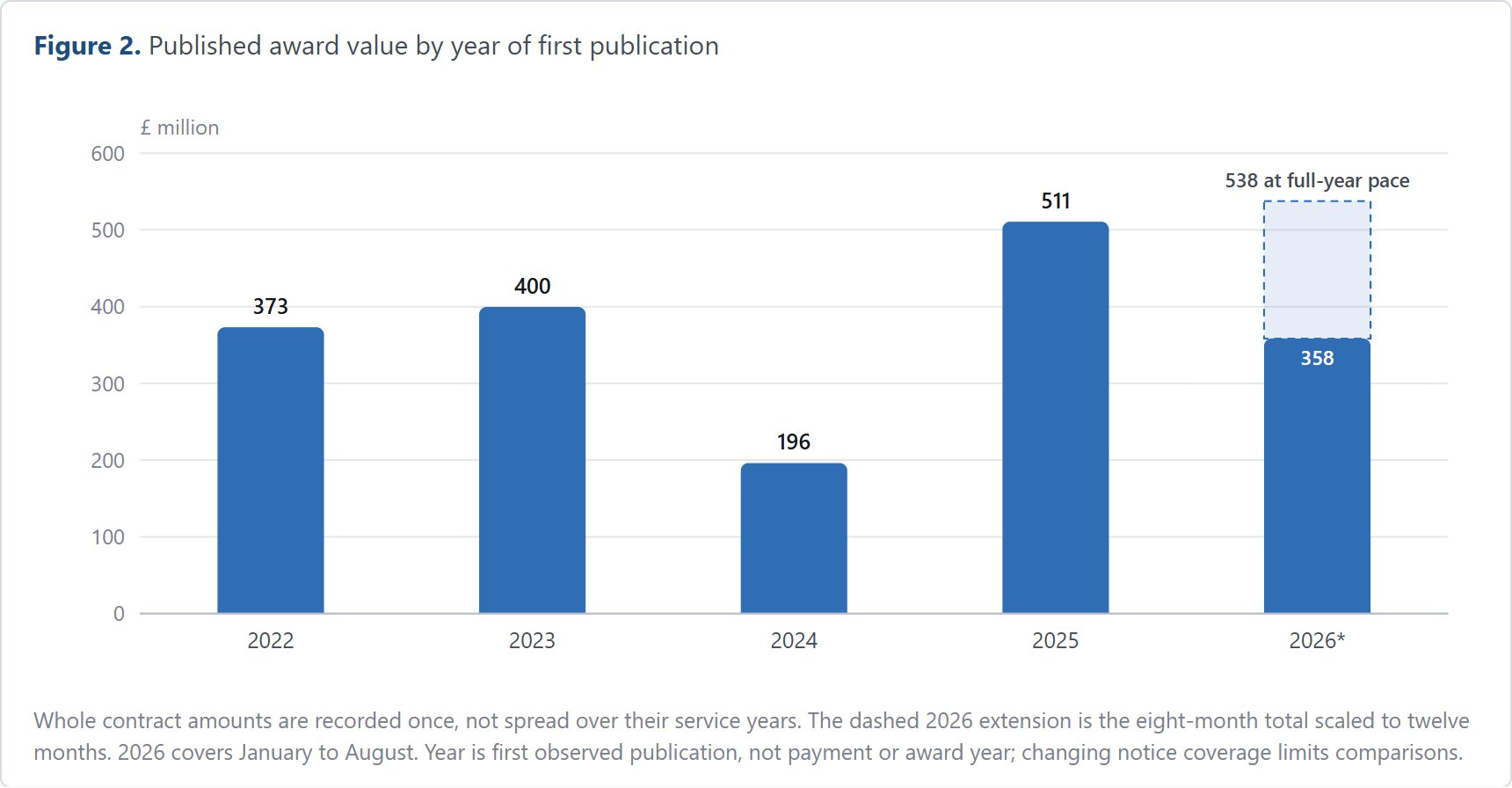
2 Volume and published value
3 What was bought
| Category | Procurements | Eligible valued awards | Median value |
|---|---|---|---|
| Autonomy, robotics & drones with AI | 157 | 75 | £222k |
| Predictive analytics & bespoke ML models | 133 | 109 | £135k |
| Transcription, summarisation & meeting notes | 103 | 89 | £75k |
| Policy research, sector studies & surveys | 93 | 78 | £77k |
| AI safety, assurance & evaluation research | 87 | 71 | £200k |
| Facial recognition, biometrics & policing vision | 81 | 54 | £166k |
| Traffic, transport & rail vision | 80 | 60 | £79k |
| AI training, bootcamps & courses | 80 | 56 | £75k |
| Records, search, knowledge & document AI | 77 | 57 | £75k |
| Chatbots & virtual assistants | 75 | 55 | £106k |
| Data & AI platforms and architecture | 68 | 52 | £394k |
| Ambient voice & clinical documentation | 66 | 47 | £124k |
3.1 Generative AI
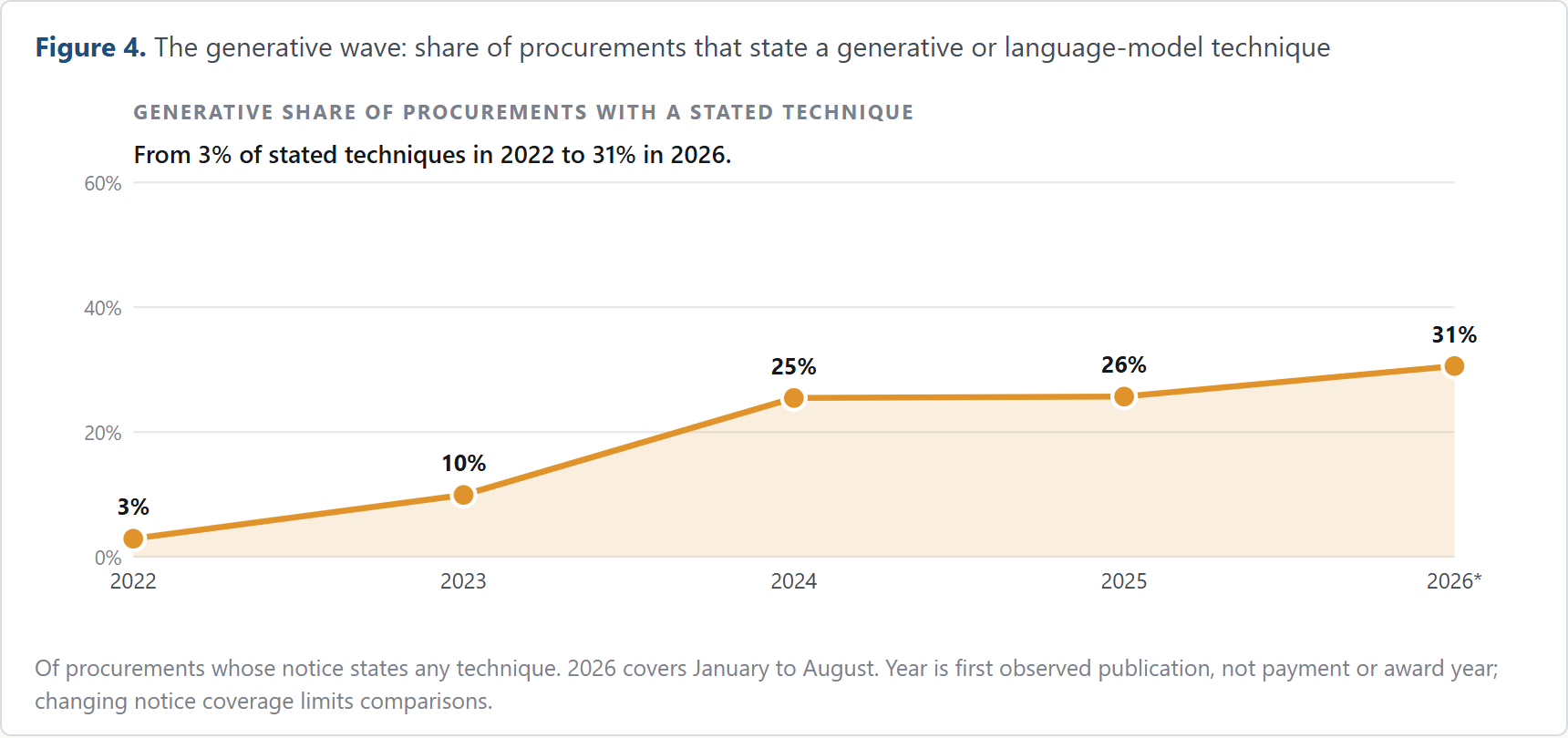
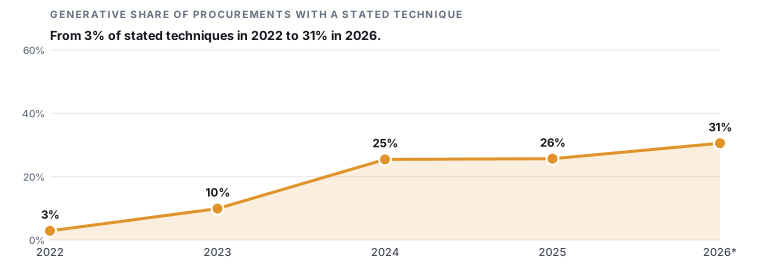
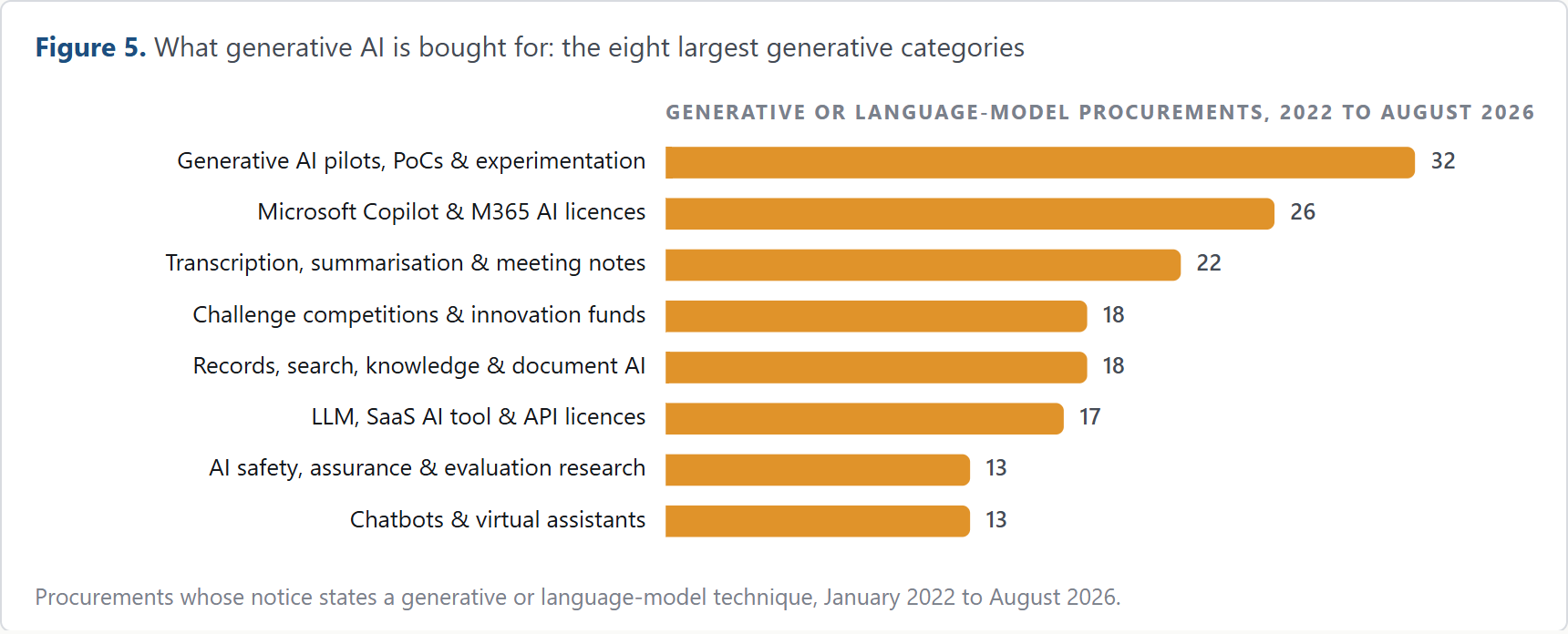
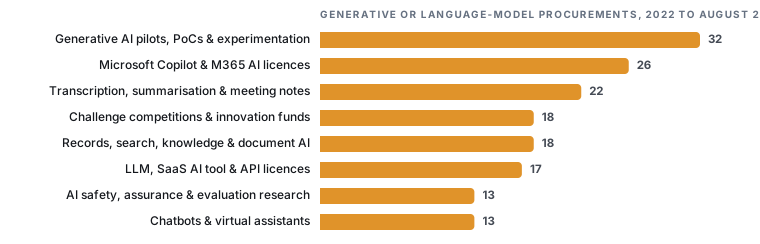
The chart excludes 1,095 records that do not identify a technique. Work about AI, such as research programmes, courses or governance, often does not specify one. These records remain in the downloadable data.
4 Buyers and public services
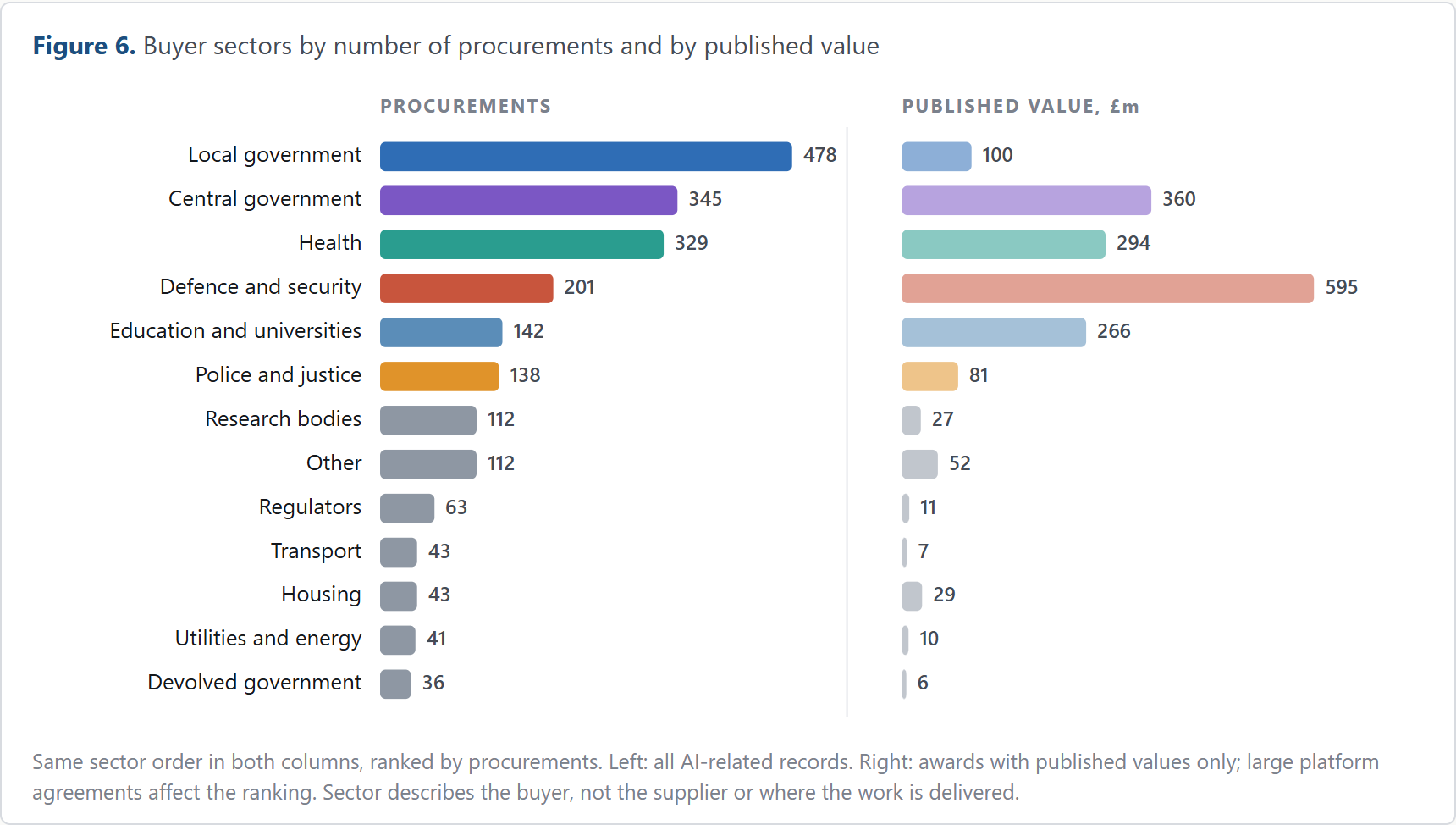
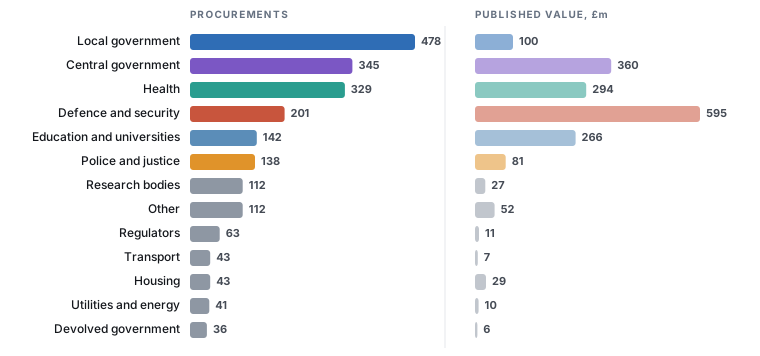
| Buyer | Procurements | Published value |
|---|---|---|
| Ministry of Defence | 114 | £541.0m |
| Department for Science, Innovation & Technology (DSIT) | 103 | £56.8m |
| Defence Science and Technology Laboratory (Dstl) | 62 | £22.5m |
| Home Office | 49 | £44.3m |
| Department for Education | 39 | £11.5m |
| UK Research and Innovation (UKRI) | 30 | £52.4m |
| Department for Work and Pensions | 28 | £30.2m |
| Department of Health and Social Care | 28 | £12.0m |
| BEIS | 26 | £4.8m |
| Government Commercial Agency | 23 | £11.0m |
| Department for Environment, Food and Rural Affairs | 23 | £5.3m |
| UK Shared Business Services (UK SBS) | 23 | £3.5m |
4.1 Health: documentation, clinical decisions and imaging
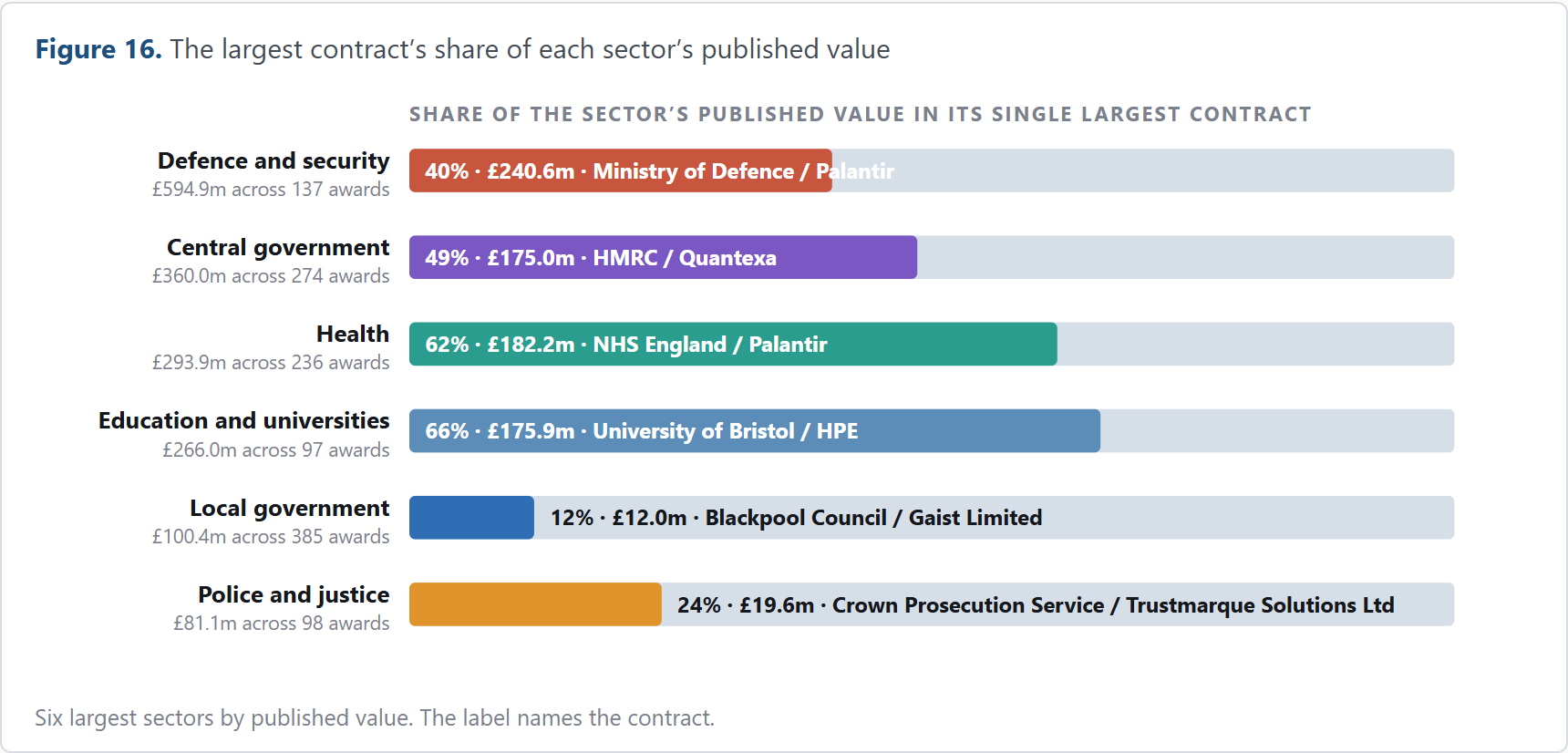
Health bodies made 259 confirmed awards. The 236 with a published value total £293.9m, 16.0% of all published value in this report. By count, three clinical categories lead: clinical documentation and speech tools (46, 18%), triage, decision support and patient-facing tools (38, 15%) and diagnostic imaging (36, 14%). Together they are 46% of health awards but 11% of health value.
By value, data and AI platforms dominate: 14 awards carry £229.7m, 78% of health value, and the £182.2m Federated Data Platform contract alone accounts for 62%. Documentation includes conventional speech recognition as well as newer ambient recording tools.
| Category | Confirmed awards | Share of sector awards | Published value | Share of sector value |
|---|---|---|---|---|
| Ambient voice & clinical documentation | 46 | 18% | £14.2m | 5% |
| Clinical triage, decision support & patient-facing tools | 38 | 15% | £12.1m | 4% |
| Diagnostic imaging AI | 36 | 14% | £5.2m | 2% |
| NHS AI programmes, awards & evaluation | 19 | 7% | £11.4m | 4% |
| Data & AI platforms and architecture | 14 | 5% | £229.7m | 78% |
| Digital pathology & laboratory AI | 10 | 4% | £1.6m | 1% |
| Other categories | 96 | 37% | £19.8m | 7% |
| All categories | 259 | 100% | £293.9m | 100% |
4.2 Policing and justice: identification and image analysis
Facial recognition, biometrics and policing vision account for 43 of 103 confirmed awards (42%) and £38.8m of the sector’s £81.1m published value (48%); the sector holds 4.4% of all published value. The category includes biometric services and image-analysis tools, not just live facial recognition. Licences are the other large item by value: 4 Microsoft Copilot awards carry £23.6m (29%) and 4 language-model and SaaS licences £7.2m (9%). There are also 5 awards for generative-AI pilots and 6 for data and AI platforms. The sector includes the Home Office, police, courts and prisons.
| Category | Confirmed awards | Share of sector awards | Published value | Share of sector value |
|---|---|---|---|---|
| Facial recognition, biometrics & policing vision | 43 | 42% | £38.8m | 48% |
| Data & AI platforms and architecture | 6 | 6% | £1.7m | 2% |
| AI delivery, build & integration partner | 5 | 5% | £4.9m | 6% |
| Generative AI pilots, PoCs & experimentation | 5 | 5% | £402k | 0% |
| Records, search, knowledge & document AI | 4 | 4% | £1.4m | 2% |
| LLM, SaaS AI tool & API licences | 4 | 4% | £7.2m | 9% |
| Other categories | 36 | 35% | £26.7m | 33% |
| All categories | 103 | 100% | £81.1m | 100% |
4.3 Local government: casework and day-to-day services
Councils account for 478 procurements, 23% of the total, and 409 confirmed awards, but only £100.4m of published value (5.5%): council contracts are numerous and small. Transcription, summaries and meeting notes is the largest single category, with 74 awards (18%). Two vision categories, traffic and transport vision (54) and road-condition surveys (43), together account for 97 (24%). Predictive analytics accounts for 48 awards and chatbots for 38. By value the order changes: chatbots (£18.9m, 19%) and road-condition surveys (£18.0m, 18%) lead.
| Category | Confirmed awards | Share of sector awards | Published value | Share of sector value |
|---|---|---|---|---|
| Transcription, summarisation & meeting notes | 74 | 18% | £10.1m | 10% |
| Traffic, transport & rail vision | 54 | 13% | £5.5m | 5% |
| Predictive analytics & bespoke ML models | 48 | 12% | £12.4m | 12% |
| Road & highway condition surveys | 43 | 11% | £18.0m | 18% |
| Chatbots & virtual assistants | 38 | 9% | £18.9m | 19% |
| Records, search, knowledge & document AI | 15 | 4% | £874k | 1% |
| Other categories | 137 | 33% | £34.6m | 35% |
| All categories | 409 | 100% | £100.4m | 100% |
5 Data centres and their supporting work
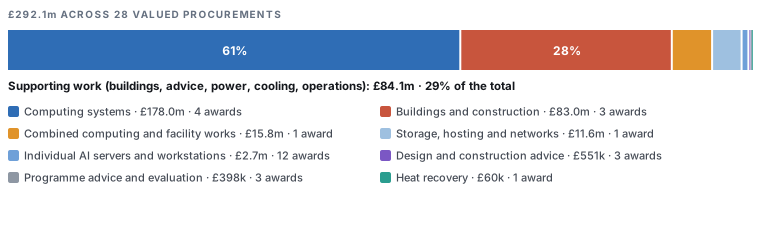
AI computing infrastructure accounts for £292.1m across 28 eligible valued procurements. This includes £84.1m for buildings, site preparation, specialist advice and other supporting work. Buying the computers is one part of the public procurement footprint: facilities also need space, power, cooling and professional services.
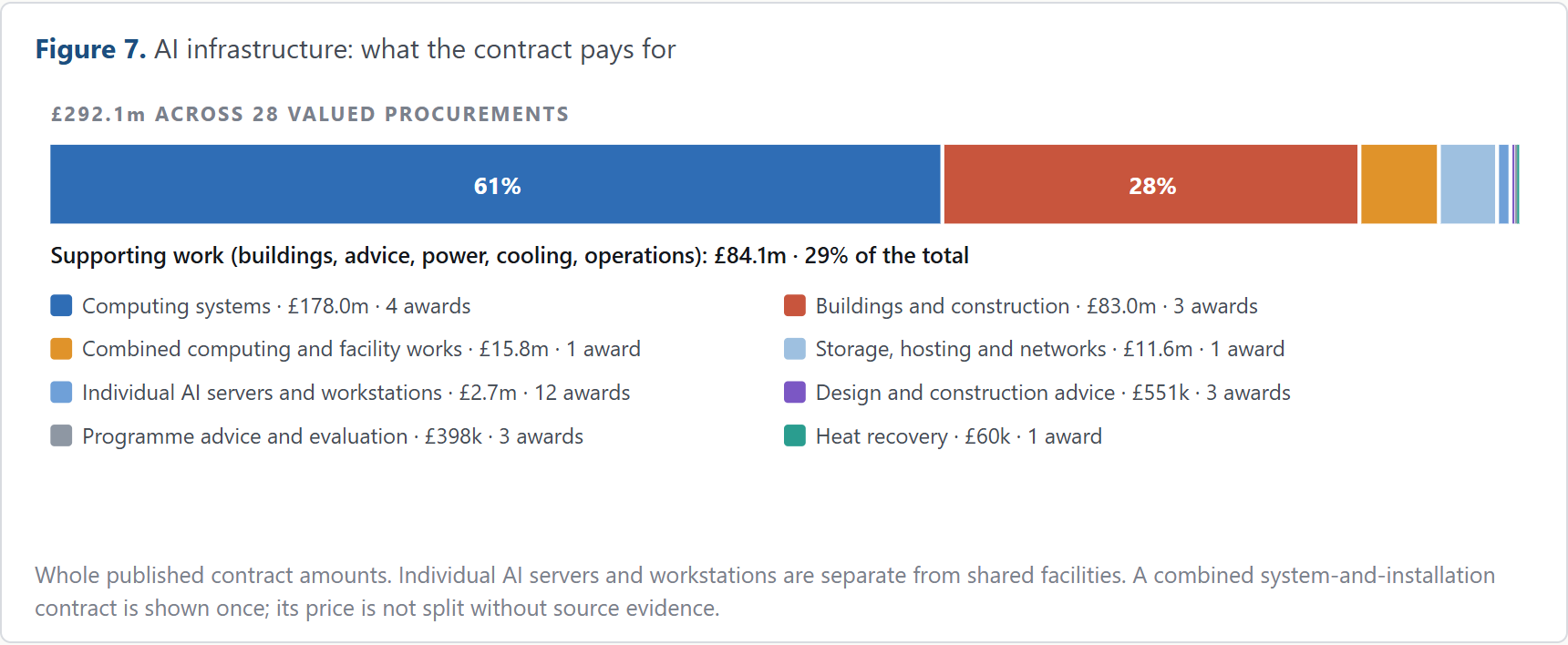
Construction and construction advice are included when the notice or a linked project source establishes a connection to an AI computing facility. The same rule covers power connections, cooling, heat recovery, planning and commercial advice. A general campus contract, an ordinary cloud subscription, or a building described as “AI-ready” does not establish that connection.
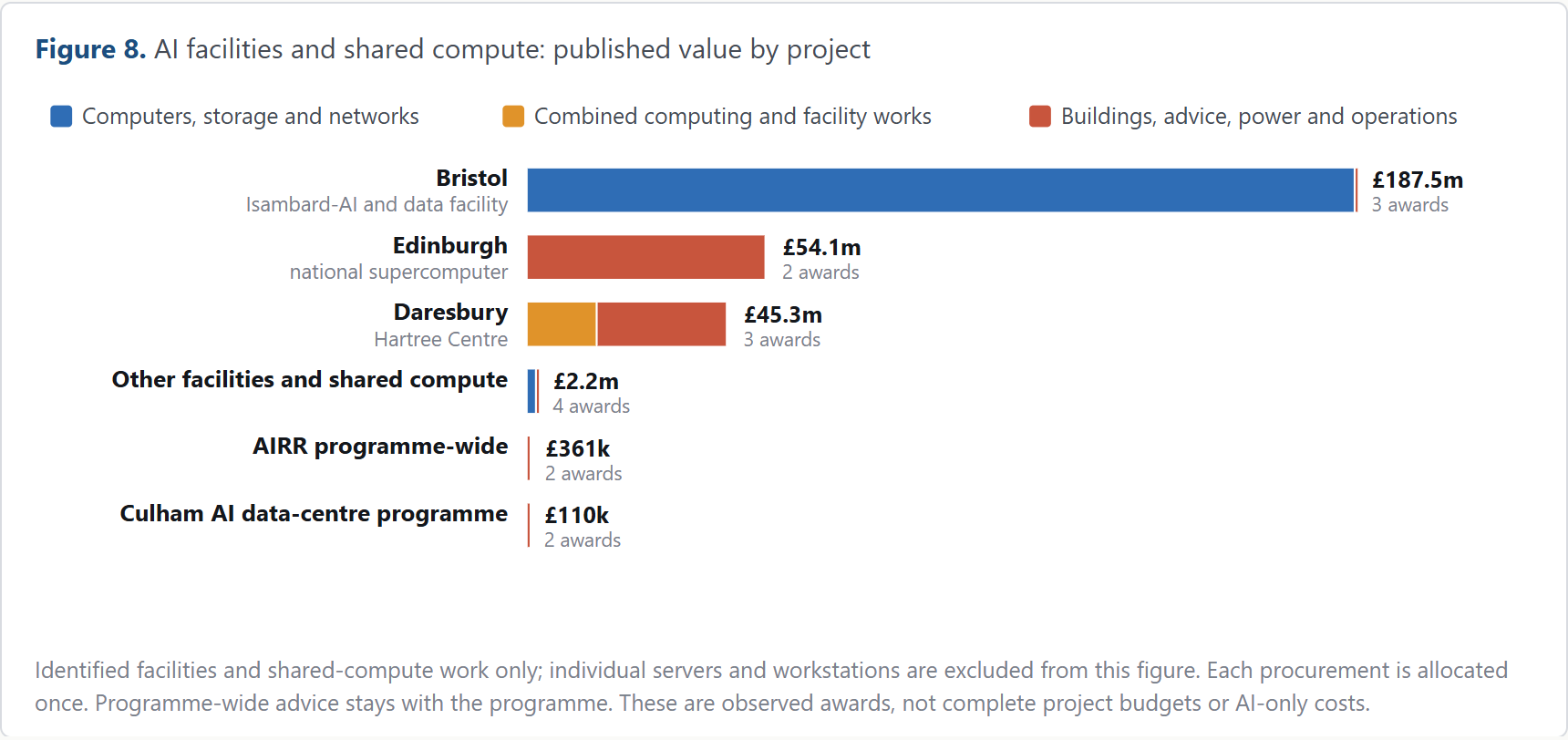
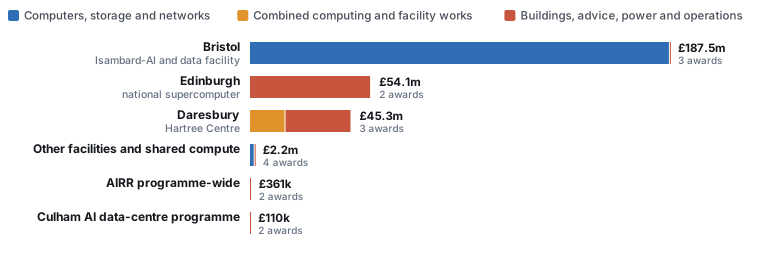
| Work purchased | Published value | Source |
|---|---|---|
| CR4 extension and infrastructure for Edinburgh’s next national supercomputer | £53.6m | Award notice |
| Main building works for the Hartree supercomputing centre at Daresbury | £28.7m | Award notice |
| Storage for Bristol’s AI Data Facility supporting Isambard-AI | £11.6m | Award notice |
| Feasibility study for recovering data-centre heat at Culham | £60k | Award notice |
A published contract can confirm that preparatory work has been bought while the main facility is still proposed. The study therefore separates signed awards from intended awards, frameworks, concession values and investment announcements. The announced scale of a development cannot be added to the awards for its component work.
General-purpose data-centre records are identified in the evidence pack, with their own scope and review fields. They are excluded from the AI total when AI use is unestablished. Procurement notices also omit parts of private development, grants, land transactions and electricity arrangement. This is a record of observed public purchases.
6 Suppliers and SME participation
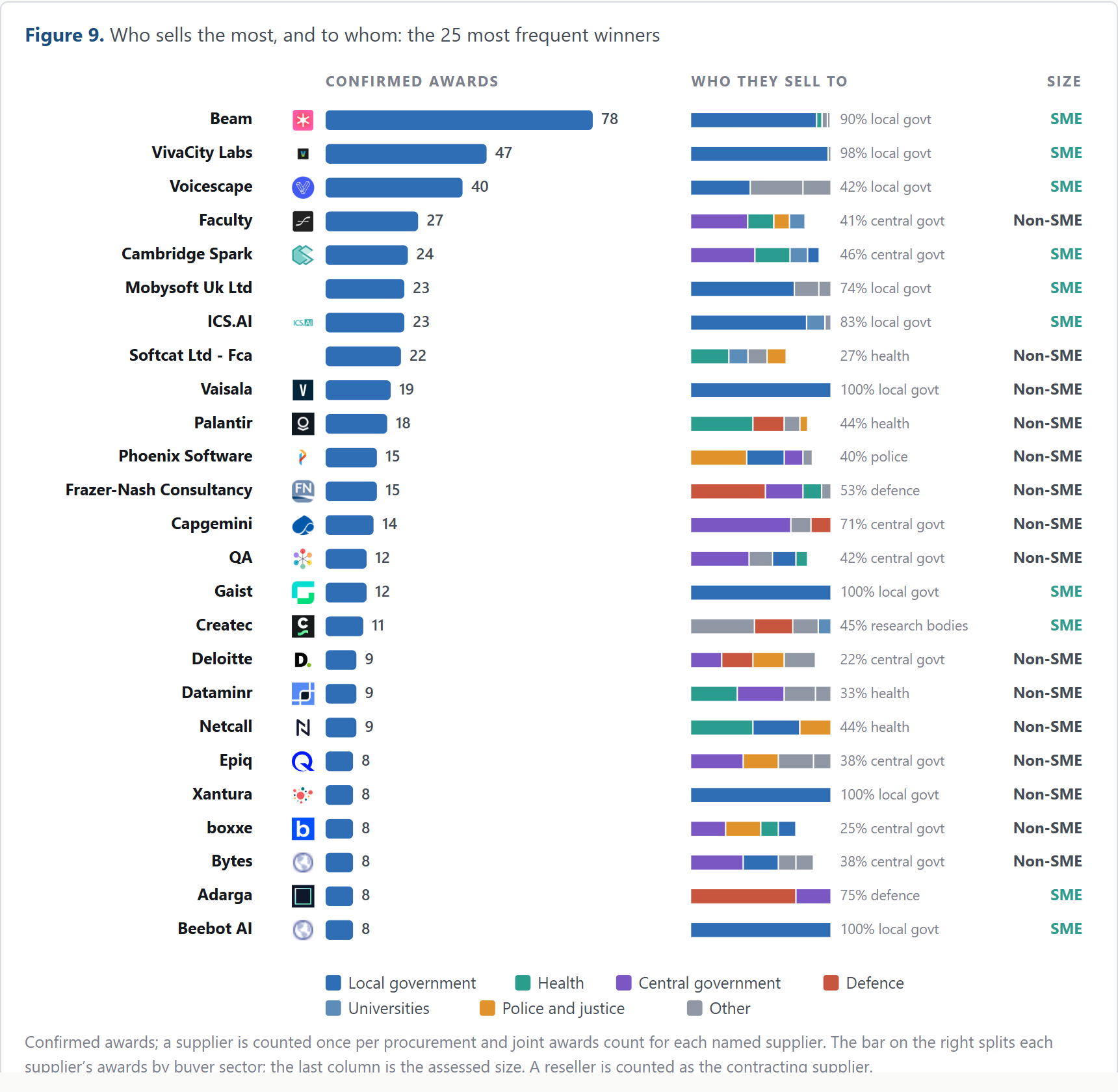
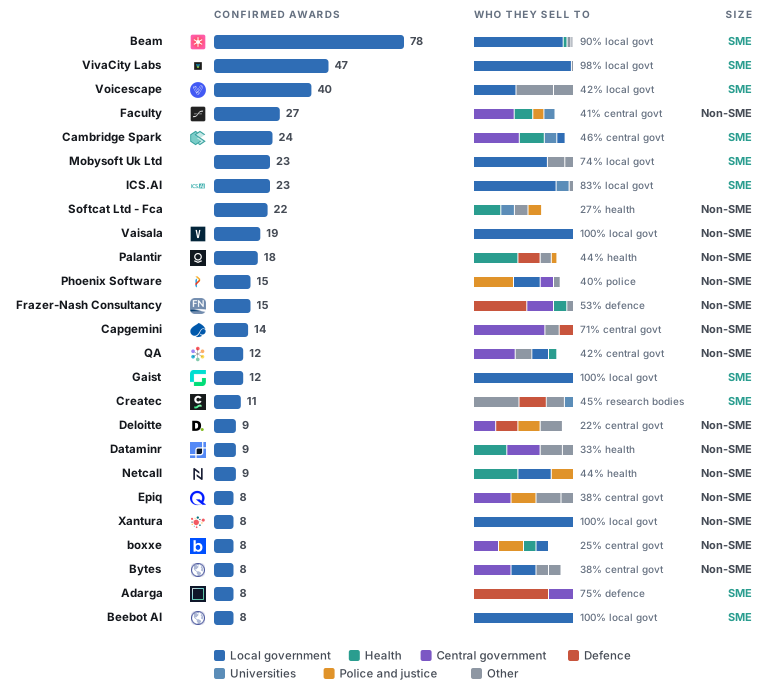
Under the current UK procurement definition, small and medium-sized enterprises (SMEs) have fewer than 250 full-time-equivalent staff and annual turnover of no more than £44m or total assets of no more than £38m. Government guidance also requires related businesses to be considered. Group accounts and established parent relationships take priority over notice declarations. Joint awards take the larger assessed supplier. The CSV separates researched size, declarations, inference and assumptions.
7 UK and overseas suppliers
UK suppliers account for 66.3% of valued awards and 35.0% of published value. Overseas suppliers account for 33.3% of awards and 64.8% of value. The remaining 0.5% of awards (0.1% of value) are 5 joint awards naming suppliers of both kinds and 2 awards whose notice names no supplier.
7.1 How suppliers are grouped
UK supplier: headquartered in the UK with no established foreign control. This includes UK-headquartered multinationals and UK universities and public bodies supplying work.
Overseas supplier: headquartered outside the UK, or under established foreign control. This includes UK subsidiaries of foreign-controlled groups and overseas public and academic bodies.
Joint or not established: joint awards naming suppliers of both kinds, awards whose notice names no supplier, and suppliers with insufficient headquarters or control evidence.
Established foreign control takes priority over a UK headquarters. A UK grouping does not establish UK ownership: where control is unresolved, headquarters and operating reach decide. Of the 1,506 valued awards, 536 went to UK companies with a domestic footprint, 363 to UK-headquartered multinationals and 121 to public or academic bodies; the CSV keeps these fields separate.
These categories describe suppliers, not where work is delivered or where payments ultimately go. They use the latest researched evidence, rather than ownership at the award date.
8 Contract values and concentration
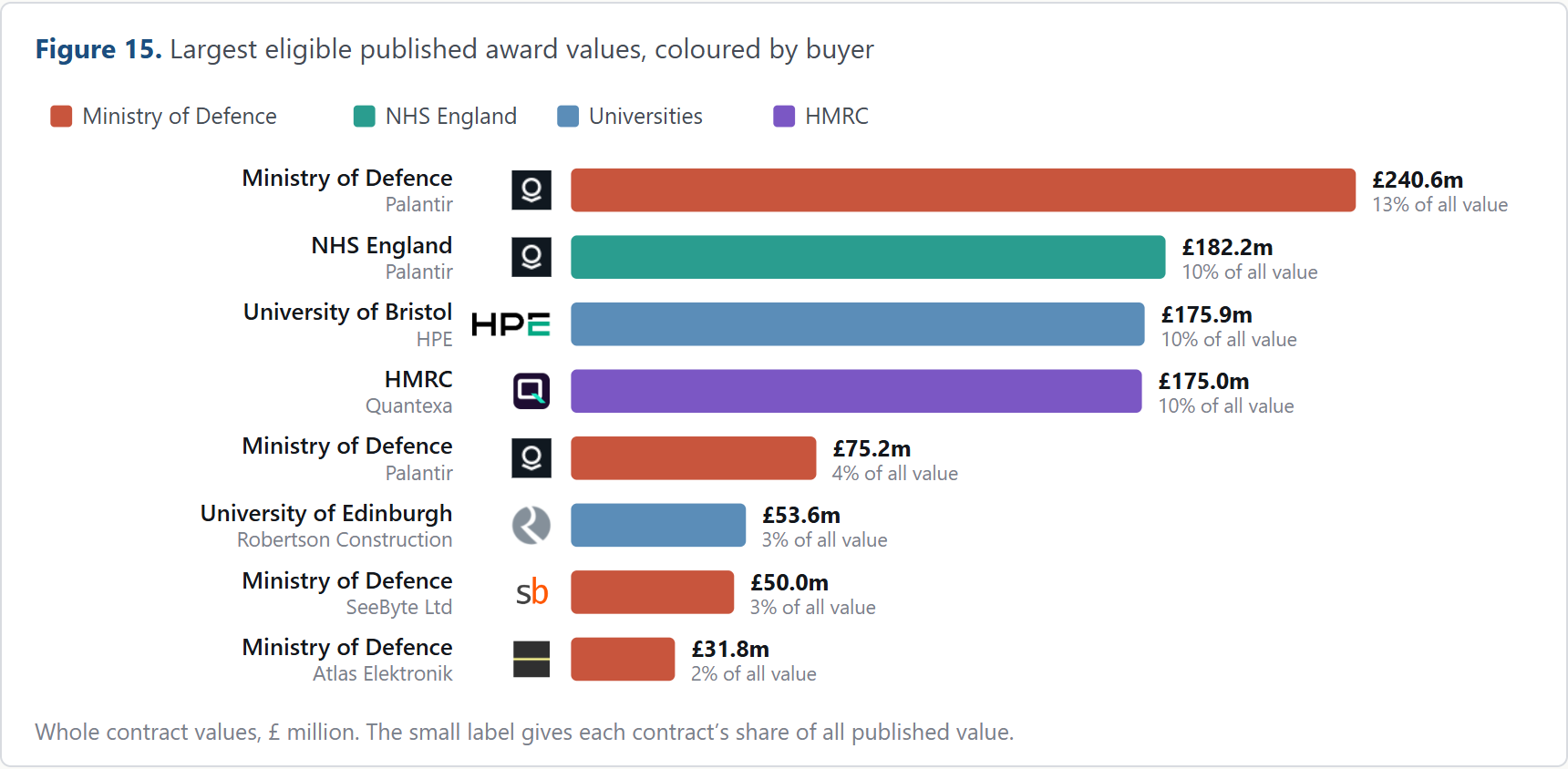
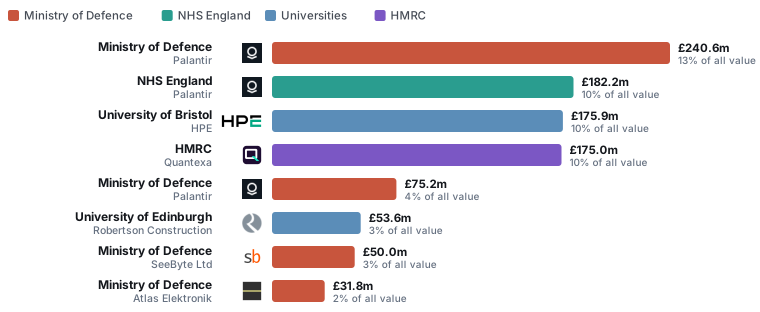
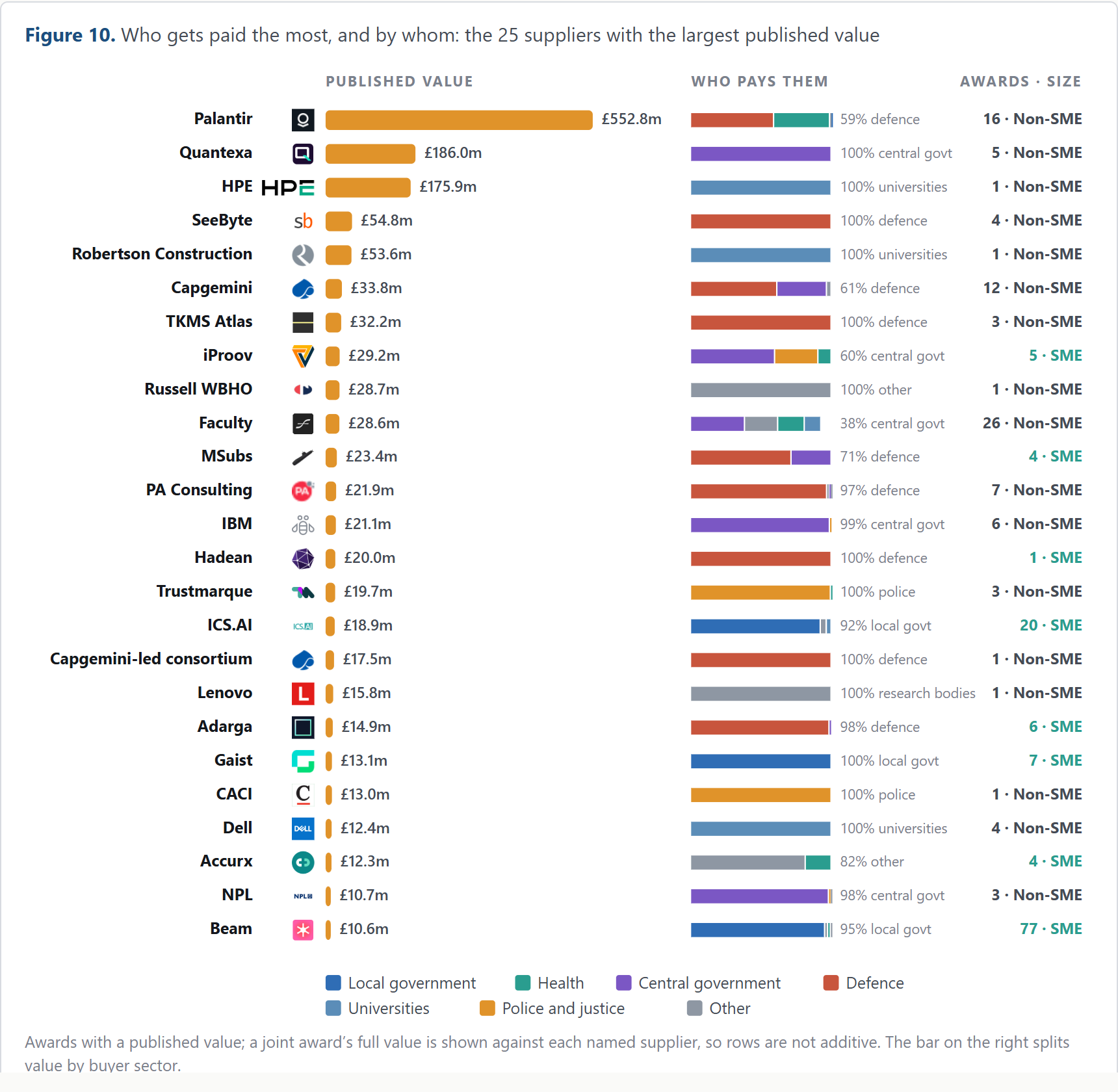
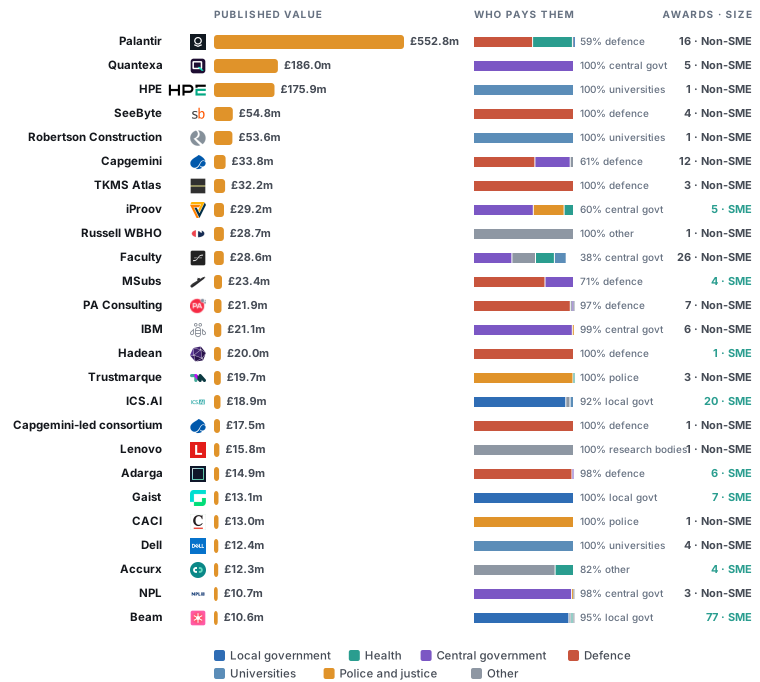
The four largest records carry 42.1% of published value. The two Palantir agreements account for £422.8m (23.0%).
| Contract / source | Published value | Interpretation |
|---|---|---|
| MoD / Palantir | £240.6m | UK7 confirms signature on 30 December 2025. Three-year enterprise agreement, commencing April 2026. |
| NHS England / Palantir | £182.2m | Published estimate based on use; the notice explicitly says expenditure is not committed. Contract under review. |
| University of Bristol / HPE | £175.9m | AI computing infrastructure. F15 amount, with subsequent buyer confirmation of delivery. Programme funding is a different figure. |
| HMRC / Quantexa | £175.0m | Maximum including options, licences and services. Initial software commitment is £80,912,019. |
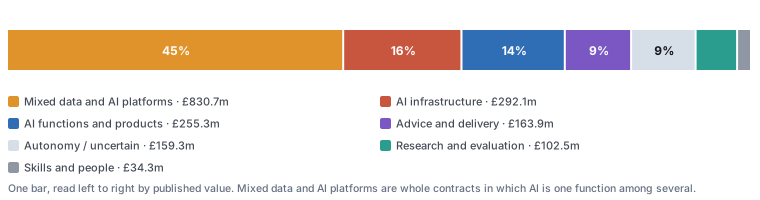
Published award value records whole contract amounts. The notices do not measure payments made or isolate the cost of AI within a wider contract.
8.1 Frameworks and ceilings
A framework is a pre-competed route for future purchases. Its ceiling is excluded: a £1bn ceiling followed by three £200,000 purchases represents £600,000 of contracts, not £1bn of expenditure. Individual call-offs can enter the total when the published record confirms an eligible award. Unresolved framework roles remain excluded.
9 Method and reliability
The introduction describes how candidates were found and read. This section records the counts and the rules that decide what is counted.
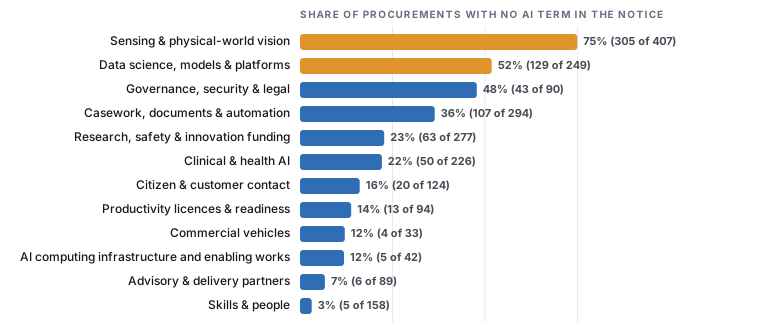
Retrieval. The searches ran over an archive of 582,443 procurement records. Six routes were combined: AI terms in titles and descriptions, the same terms in structured summaries of the work, named AI products, a list of suppliers whose only product is AI, and semantic search against the 44 category descriptions in the annex. 16,870 candidates were read in full. A keyword sweep run on 15 September 2026 as a recall check found 305 further awarded procurements that the candidate set had never judged, most of them false matches such as “LLM” for lease and landlord management or “AI” for avian influenza; each was judged under the same rules, with three independent reads for any row judged AI-related or adjacent, and 14 were added as AI-related and 88 as adjacent. Of the 2,083 procurements included, 1,333 matched the saved direct AI-term query and 750 (36%) did not. Product, supplier and semantic routes overlap, so the 750 cannot all be attributed to semantic search alone. The discovery period was longer than the final reporting window.
Notices describing the same purchase are linked and counted once. The report covers procurements first observed from January 2022 to August 2026. Starting in 2022 includes the year ChatGPT launched and provides a baseline before its wider adoption.
Only notices published by the end of August 2026 are used. Award values dated outside the reporting window are excluded. Where an award date is missing, the record must still confirm an award by the cutoff.
The value total includes confirmed contracts with a usable published amount in pounds sterling. An announcement that a buyer intends to award a contract is not enough: the evidence must confirm the award or delivery. This distinction matters because some notices are published before the contract is signed.
The latest confirmed amount is used, including stated options or estimates. Repeated notices are not added together, and joint contracts are counted once. Conflicting amounts are excluded until they can be reconciled. Each included value links to the notice that supports it.
Framework ceilings are excluded: they describe potential future purchases. Individual contracts placed through a framework can be included when an award and its value are confirmed.
9.1 Classification and review
Each AI-related procurement from the original AI search was classified in repeated Claude Opus 5 assessments. The author reviewed the AI-related and borderline cases, recording decisions on disputed boundaries and reconciling inconsistent classifications. The dataset retains the category, rationale and source links for each decision.
A separate data-centre search reviewed 12,821 available candidate records. A stricter second review covered 4,355 relevant, uncertain and sampled excluded records. AI-assisted review checked the available notice text, the connection to AI computing, award confirmation and published value. Human review of the included records and their values was completed before publication. Decisions and source links are retained in the data.
10 Coverage, interpretation and other sources
BidSkim combines Find a Tender, Contracts Finder, Public Contracts Scotland and Sell2Wales. These portals cover public purchasing across the UK, from local contracts to national programmes. The same procurement can appear on several portals; linked notices are counted together.
| Buyer | Typical publication rules |
|---|---|
| England and UK central government | Award details generally become reportable at £12,000 for central government and £30,000 for other authorities, including VAT. These thresholds replaced £10,000/£25,000 in December 2022. NHS trusts use £12,000 for new procurements under the rules introduced in February 2025. |
| Wales | New devolved Welsh procurements generally require award details from £30,000 including VAT through Sell2Wales. Earlier years followed different rules and policy commitments. |
| Scotland | Regulated goods and services opportunities and awards generally appear on Public Contracts Scotland from £50,000 excluding VAT. |
| Northern Ireland | This dataset captures Northern Ireland notices on Find a Tender. It does not ingest eTendersNI directly, limiting coverage of smaller purchases. |
A tender notice invites bids; an award notice reports the result. Some purchases appear only after award. Since February 2025, new procurements under the Procurement Act use Find a Tender for higher-value and relevant lower-value notices. Procurements begun under the earlier rules continue under those rules.
The report measures published contract values, not government payments. It can miss unpublished purchases and AI use that a notice does not describe. Values are not adjusted for inflation, and VAT treatment follows the source where specified. These figures therefore describe the public procurement record, rather than all government spending on AI.
10.1 Other published evidence
| Source | Evidence provided |
|---|---|
| Tussell tracker | Awarded contracts identified using capability, product and company terms, followed by AI-assisted classification and human oversight. |
| National Audit Office survey | Government bodies’ reported use of AI and plans for adoption, rather than contract values. |
| Algorithmic transparency register | Descriptions of algorithmic tools and their use. One tool may involve several contracts, while one contract may support several tools. |
Tussell identifies awarded contracts using keywords for AI capabilities, products and companies, counts frameworks and misses a lot of contracts that don’t match the keywords. Its series starts in 2018. This report starts in 2022 and adds semantic retrieval to its text searches.
11 Verification, citation and reuse
1. Open the figure’s CSV table to see its categories and values. Every chart has a stable number and a downloadable PNG and SVG.
2. Request the full dataset with a work or education email. The email link opens the procurement CSV, buyer table, supplier assessments, source crosswalk and evidence pack.
3. Filter classification = core and value_included = true to reproduce the published-value population. Sum included_value_gbp. Do not sum the supplier table or repeat the procurement amount for each linked source notice.
4. Follow value_source_url for the amount and confirmation. Use source_notice_urls and the crosswalk for earlier versions. Look at value_basis, value_warning, the award date and commercial route before quoting a record.
5. Run the supplied reproduce.py against the CSV with Python 3.10 or later. It uses only the standard library and outputs exact integer-pence totals and the principal breakdowns. Compare these with metrics.json and the file hashes in the release manifest.
Cite as: White, S. (2026) Artificial intelligence in UK public procurement, 2022 to 2026. BidSkim Research, Procurement Data Series No. 1. Version 2026-09-15. Figure [number]. Available at: https://bidskim.com/research/ai-in-uk-public-procurement-2022-2026
Report text, original figures and dataset compilation are offered under Creative Commons Attribution 4.0. Original notices remain subject to their source terms. Attribution does not require endorsement. Send corrections to [email protected] with the procurement ID, source URL and proposed correction. Material changes receive a new version and correction note; the old figures should not be silently replaced.
12 Annex: classification lines
Each procurement is assigned a primary category describing the work being bought. The definitions below guide both the search and classification. Categories marked “adjacent” cover related work that does not meet the report’s AI definition and are excluded from the headline totals.
| Code | Purchased category | What the category covers |
|---|---|---|
| AI-A1 | Diagnostic imaging AI | AI software for radiology and diagnostic imaging analysis such as chest X-ray, stroke CT, mammography, MSK, prostate MRI, fracture and lung nodule detection, and deep-learning image reconstruction |
| AI-A2 | Digital pathology & laboratory AI | AI-assisted histology, cytology, genomic variant calling and laboratory image analysis; digital pathology where AI diagnosis or QC is a stated lot |
| AI-A3 | Ambient voice & clinical documentation | Ambient voice technology and AI scribing that records clinical consultations and drafts notes, letters, referrals and dictation; speech recognition for clinicians |
| AI-A4 | Clinical triage, decision support & patient-facing tools | AI tools for clinical triage, decision support, symptom checking, dermatology and physiotherapy assessment, remote monitoring analytics, cancer-risk prediction and patient coaching |
| AI-A5 | NHS AI programmes, awards & evaluation | National NHS and DHSC AI programmes including the AI Health and Care Award, AI Lab, AI Deployment Platform and technology-specific evaluations |
| AI-A6 | Clinical operations, coding & workforce AI | AI for clinical coding, hospital operations, theatre and bed scheduling, rota optimisation, discharge prediction, patient-flow forecasting and patient-feedback text analytics |
| AI-A7 | Radiotherapy & treatment-planning AI | AI for radiotherapy auto-contouring, dose planning and treatment optimisation |
| AI-B1 | Chatbots & virtual assistants | AI chatbot or virtual assistant for citizen, customer, tenant or student enquiries on websites, apps and messaging channels |
| AI-B2 | Voice AI, contact centre & speech analytics | AI contact centre, voice bots, natural-language IVR and speech analytics for public sector customer service |
| AI-B3 | Digital front door & case automation | AI-enabled digital front door, integrated intake, family hub, benefits or housing case automation |
| AI-C1 | Transcription, summarisation & meeting notes | AI transcription, summarisation and note-taking tools for social workers, caseworkers, meetings, hearings and council chambers |
| AI-C2a | Intelligent automation with ML | Intelligent document processing, ML-based process mining, automation platforms where OCR, NLP or ML classification is a stated function |
| AI-C2b | Rules-based RPA (adjacent) | Robotic process automation licences, bots and delivery partners with no stated ML component |
| AI-C3 | Records, search, knowledge & document AI | AI for records management, document classification, OCR and extraction, tagging, translation, redaction, e-discovery, enterprise search, knowledge assistants and legal research |
| AI-C4 | Generative AI pilots, PoCs & experimentation | Generative AI pilot, proof of concept, sandbox, experimentation hub or innovation lab without a fixed product |
| AI-C5 | Education, assessment & tutoring AI | AI tutoring, adaptive assessment, automarking, plagiarism and AI-writing detection and AI learning platforms for schools, colleges, universities and exam bodies |
| AI-D1 | Microsoft Copilot & M365 AI licences | Microsoft 365 Copilot licences, early access programmes, rollout, adoption and use-case discovery |
| AI-D2 | LLM, SaaS AI tool & API licences | Licences or subscriptions for LLM APIs and off-the-shelf AI tools such as ChatGPT Enterprise, Azure OpenAI, Gemini, Claude, Synthesia, board and legal AI tools |
| AI-D3 | AI readiness, adoption & operating-model reviews | AI readiness assessment, adoption roadmap, governance and operating-model review or maturity assessment for one organisation |
| AI-E1 | Road & highway condition surveys | AI and computer-vision road condition surveys, pavement assessment, pothole and defect detection from vehicle imagery |
| AI-E2 | Traffic, transport & rail vision | AI traffic monitoring, passenger and pedestrian counting, incident detection, enforcement surveys, rail track and asset video analytics |
| AI-E3 | Environment, industrial & safety vision | Computer vision for waste vehicles, weed detection, wildlife, environmental monitoring, agriculture, industrial inspection, drowning detection, maritime domain awareness |
| AI-E4 | Facial recognition, biometrics & policing vision | Facial recognition, facial age estimation, CCTV analytics, fingerprint and video-search AI for police, prisons, borders and security; ANPR only when an AI or vision function is stated |
| AI-E5 | Autonomy, robotics & drones with AI | Autonomous systems, robotics and uncrewed vehicles where AI perception or decision-making is the stated purchased capability; nuclear-site robotics and BVLOS drone programmes |
| AI-F1 | Predictive analytics & bespoke ML models | Predictive analytics, machine-learning models, risk scoring, fraud detection, forecasting and optimisation built for a specific operational or policy problem |
| AI-F2 | ML engineering, datasets & MLOps | Machine-learning engineering, dataset development and labelling, ML pipelines, model registries and MLOps tooling |
| AI-F3 | Data & AI platforms and architecture | Enterprise data and AI platforms, federated data platforms, AI architecture as a service; Palantir Foundry, Quantexa, Databricks or Snowflake when ML workloads are stated |
| AI-G1 | AI computing systems and accelerator hardware | Explicit AI computing purchases or directly linked facility work: computing. Facility and AI links require source evidence. |
| AI-G2 | AI cloud compute storage and hosting | Explicit AI computing purchases or directly linked facility work: storage network. Facility and AI links require source evidence. |
| AI-G3 | AI data-centre construction and development services | Explicit AI computing purchases or directly linked facility work: facility construction, design project management, land planning legal commercial. Facility and AI links require source evidence. |
| AI-G4 | AI infrastructure power cooling and heat recovery | Explicit AI computing purchases or directly linked facility work: power grid, cooling water, heat recovery. Facility and AI links require source evidence. |
| AI-G5 | AI infrastructure operation and programme support | Explicit AI computing purchases or directly linked facility work: facility operations, programme evaluation, mixed. Facility and AI links require source evidence. |
| AI-H1 | AI safety, assurance & evaluation research | Research and technical services on AI safety, assurance, red teaming, explainability, model evaluation, standards and trustworthy AI |
| AI-H2 | Policy research, sector studies & surveys | Research reports, sector studies, adoption surveys, economic estimation, workforce-impact and impact assessments about AI |
| AI-H3 | Defence & security AI R&D | Defence and national security AI research including autonomy, wargaming, human-machine teaming, sensing and imagery analysis; Dstl and DASA contracts |
| AI-H4 | Challenge competitions & innovation funds | Challenge-led AI competitions, catalyst funds, CivTech, innovation partnerships, SBRI, pre-commercial R&D procurement and research convening such as Turing data study groups |
| AI-I1 | AI strategy & consultancy | AI strategy, business case and consultancy for a public body |
| AI-I2 | AI delivery, build & integration partner | AI technical, capability or implementation partner to design, build, integrate and run AI over a programme |
| AI-I3 | Discovery, alpha & use-case scoping | Discovery, alpha and use-case identification phases for AI |
| AI-J1 | AI apprenticeships | Apprenticeships on AI standards: ST0763 AI Data Specialist L7, Machine Learning Engineer L6, AI and Automation Practitioner L4 |
| AI-J5 | Data-skills apprenticeships (adjacent) | Data Analyst, Data Technician, Data Engineer, Data Scientist and Business Analyst apprenticeships with no stated AI content |
| AI-J2 | AI training, bootcamps & courses | AI awareness training, skills bootcamps, masterclasses, guidance materials about AI, and courses about AI |
| AI-J3 | AI specialist recruitment & contractors | Recruitment, interim and contractor roles for AI leadership or AI specialists |
| AI-J4 | Business AI-adoption programmes | Programmes helping local businesses adopt AI, run by councils, growth hubs, development banks and enterprise agencies |
| AI-K1 | AI governance, registers & ethics | AI governance frameworks, algorithm registers, ethics guidance and responsible AI checklists |
| AI-K2 | Security & assurance of AI systems | Security testing, cyber assurance and monitoring of AI systems and AI agents |
| AI-K3 | Legal services on AI | Legal advice on AI regulation, liability and procurement |
| AI-K4 | AI-driven threat detection (cyber) | Cyber-security products whose stated function is machine-learning anomaly detection or AI threat intelligence |
| AI-L1 | AI frameworks, DPS & dynamic markets (parent notices) | Framework agreements, dynamic purchasing systems and dynamic markets whose stated scope is AI |
| DC-CONTEXT | General data centres with AI use unestablished | Data-centre purchases without established AI use; excluded from AI headline totals. |