
Artificial intelligence in UK public procurement, 2022 to 2026
Every AI-related contract UK public bodies have published since ChatGPT: what was bought, what it cost, which bodies bought it and who won it. Read from the full procurement record rather than a keyword search, classified under a written definition, and published with the data behind every figure.
By Seamus White, founder of BidSkim. Published . Notices from January 2022 to August 2026. Licence CC BY 4.0.
Six findings on AI in UK public procurement
The full report has the sector tables, the value rules and the classification method.
The pace changed after ChatGPT
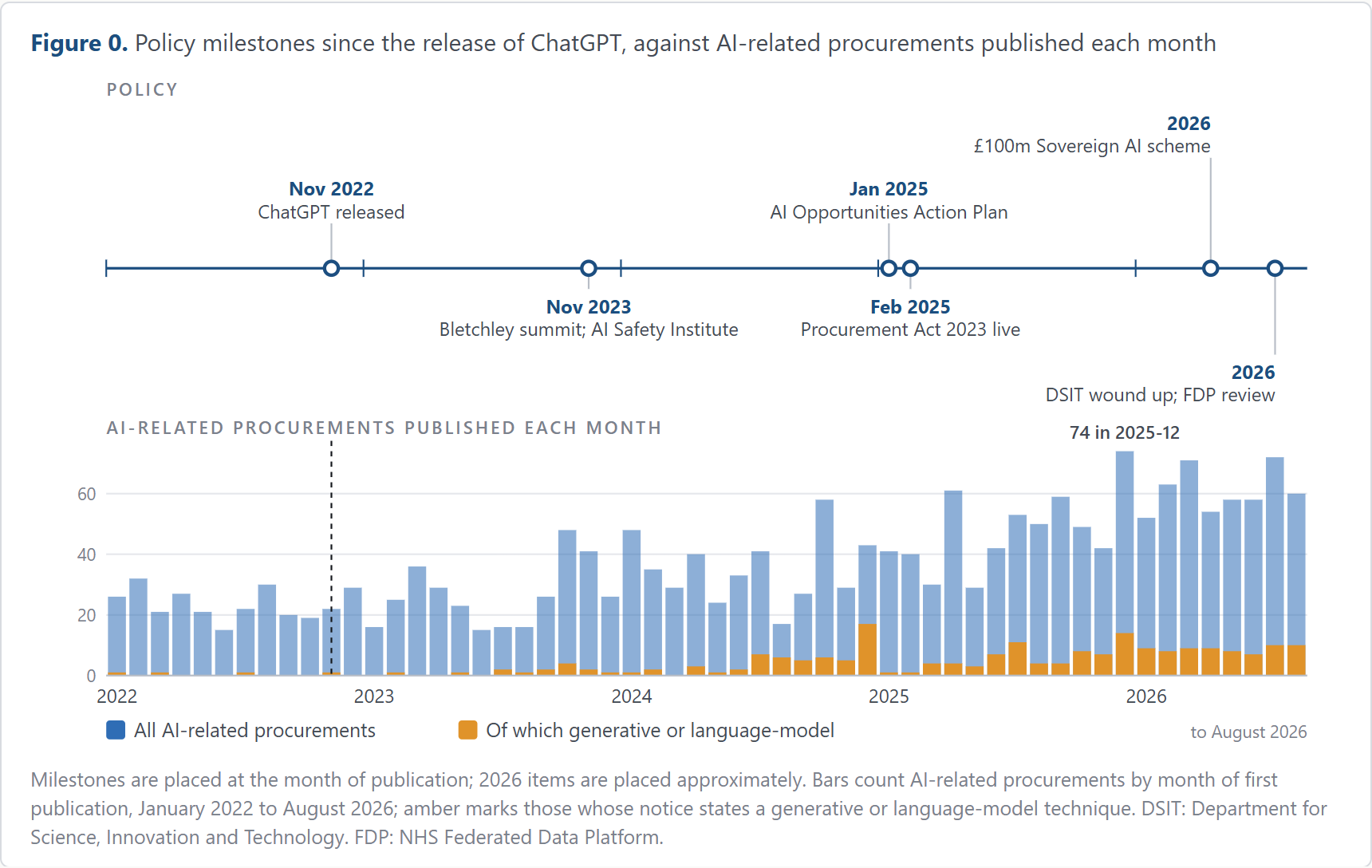
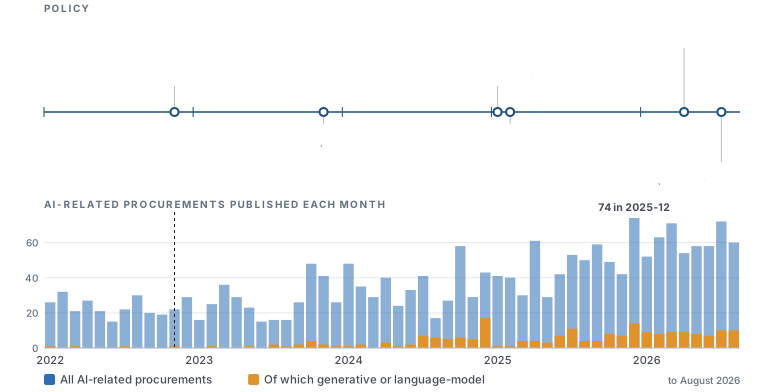
UK public bodies published 284 AI-related procurements in 2022 and 570 in 2025. The first eight months of 2026 are running at about 732 a year. The monthly record shows the turn: a flat line through 2022, then a climb that has not paused, with generative and language-model work appearing from 2024 and now a steady share of every month.
Bars count AI-related procurements published each month. Amber marks those naming a generative or language-model technique. The busiest month was Dec 2025, with 74. DSIT: Department for Science, Innovation and Technology. FDP: NHS Federated Data Platform.
Data table
| Month | AI-related procurements | Generative or language-model |
|---|---|---|
| Jan 2022 | 26 | 1 |
| Feb 2022 | 32 | 0 |
| Mar 2022 | 21 | 1 |
| Apr 2022 | 27 | 0 |
| May 2022 | 21 | 0 |
| Jun 2022 | 15 | 0 |
| Jul 2022 | 22 | 1 |
| Aug 2022 | 30 | 0 |
| Sep 2022 | 20 | 0 |
| Oct 2022 | 19 | 0 |
| Nov 2022 | 22 | 1 |
| Dec 2022 | 29 | 0 |
| Jan 2023 | 16 | 0 |
| Feb 2023 | 25 | 1 |
| Mar 2023 | 36 | 0 |
| Apr 2023 | 29 | 0 |
| May 2023 | 23 | 1 |
| Jun 2023 | 15 | 0 |
| Jul 2023 | 16 | 2 |
| Aug 2023 | 16 | 1 |
| Sep 2023 | 26 | 2 |
| Oct 2023 | 48 | 4 |
| Nov 2023 | 41 | 2 |
| Dec 2023 | 26 | 1 |
| Jan 2024 | 48 | 1 |
| Feb 2024 | 35 | 2 |
| Mar 2024 | 29 | 0 |
| Apr 2024 | 40 | 3 |
| May 2024 | 24 | 1 |
| Jun 2024 | 33 | 2 |
| Jul 2024 | 41 | 7 |
| Aug 2024 | 17 | 6 |
| Sep 2024 | 27 | 5 |
| Oct 2024 | 58 | 6 |
| Nov 2024 | 29 | 5 |
| Dec 2024 | 43 | 17 |
| Jan 2025 | 41 | 1 |
| Feb 2025 | 40 | 1 |
| Mar 2025 | 30 | 4 |
| Apr 2025 | 61 | 4 |
| May 2025 | 29 | 3 |
| Jun 2025 | 42 | 7 |
| Jul 2025 | 53 | 11 |
| Aug 2025 | 50 | 4 |
| Sep 2025 | 59 | 4 |
| Oct 2025 | 49 | 8 |
| Nov 2025 | 42 | 7 |
| Dec 2025 | 74 | 14 |
| Jan 2026 | 52 | 9 |
| Feb 2026 | 63 | 8 |
| Mar 2026 | 71 | 9 |
| Apr 2026 | 54 | 9 |
| May 2026 | 58 | 8 |
| Jun 2026 | 58 | 7 |
| Jul 2026 | 72 | 10 |
| Aug 2026 | 60 | 10 |
Buying replaced studying
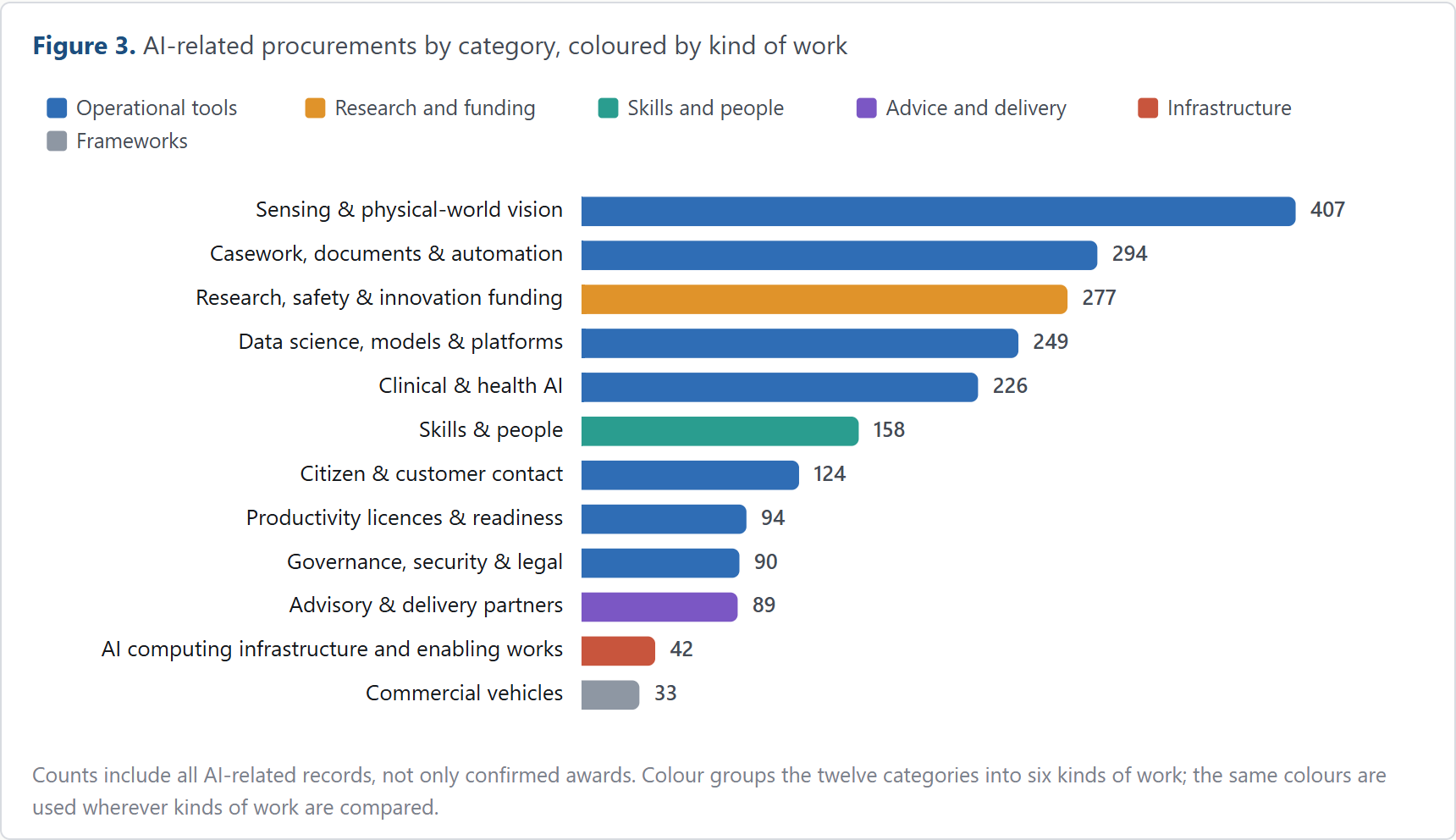
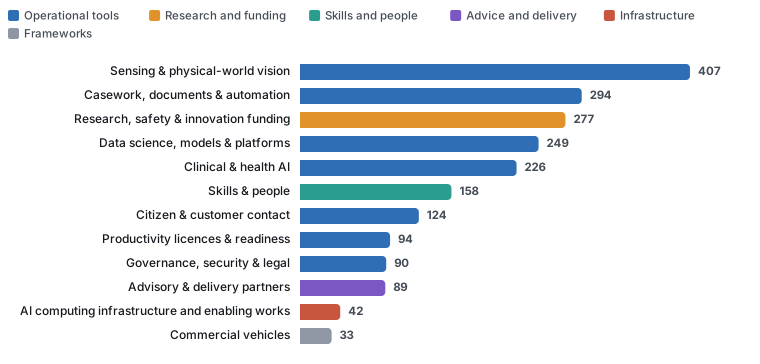
In 2022 22% of AI-related procurements were research, evaluation or innovation funding. By 2026 that share was 6%. The growth is in tools in use: transcription for social workers, ambient voice for clinicians, traffic and road-condition cameras, casework automation and productivity licences.
Sensing & physical-world vision is the largest category, with 407 procurements, followed by casework, documents & automation with 294.
Data table
| Category | Kind of work | Procurements |
|---|---|---|
| Sensing & physical-world vision | Operational tools | 407 |
| Casework, documents & automation | Operational tools | 294 |
| Research, safety & innovation funding | Research and funding | 277 |
| Data science, models & platforms | Operational tools | 249 |
| Clinical & health AI | Operational tools | 226 |
| Skills & people | Skills and people | 158 |
| Citizen & customer contact | Operational tools | 124 |
| Productivity licences & readiness | Operational tools | 94 |
| Governance, security & legal | Operational tools | 90 |
| Advisory & delivery partners | Advice and delivery | 89 |
| AI computing infrastructure and enabling works | Infrastructure | 42 |
| Commercial vehicles | Frameworks | 33 |
UK firms win the contracts; overseas firms hold the money
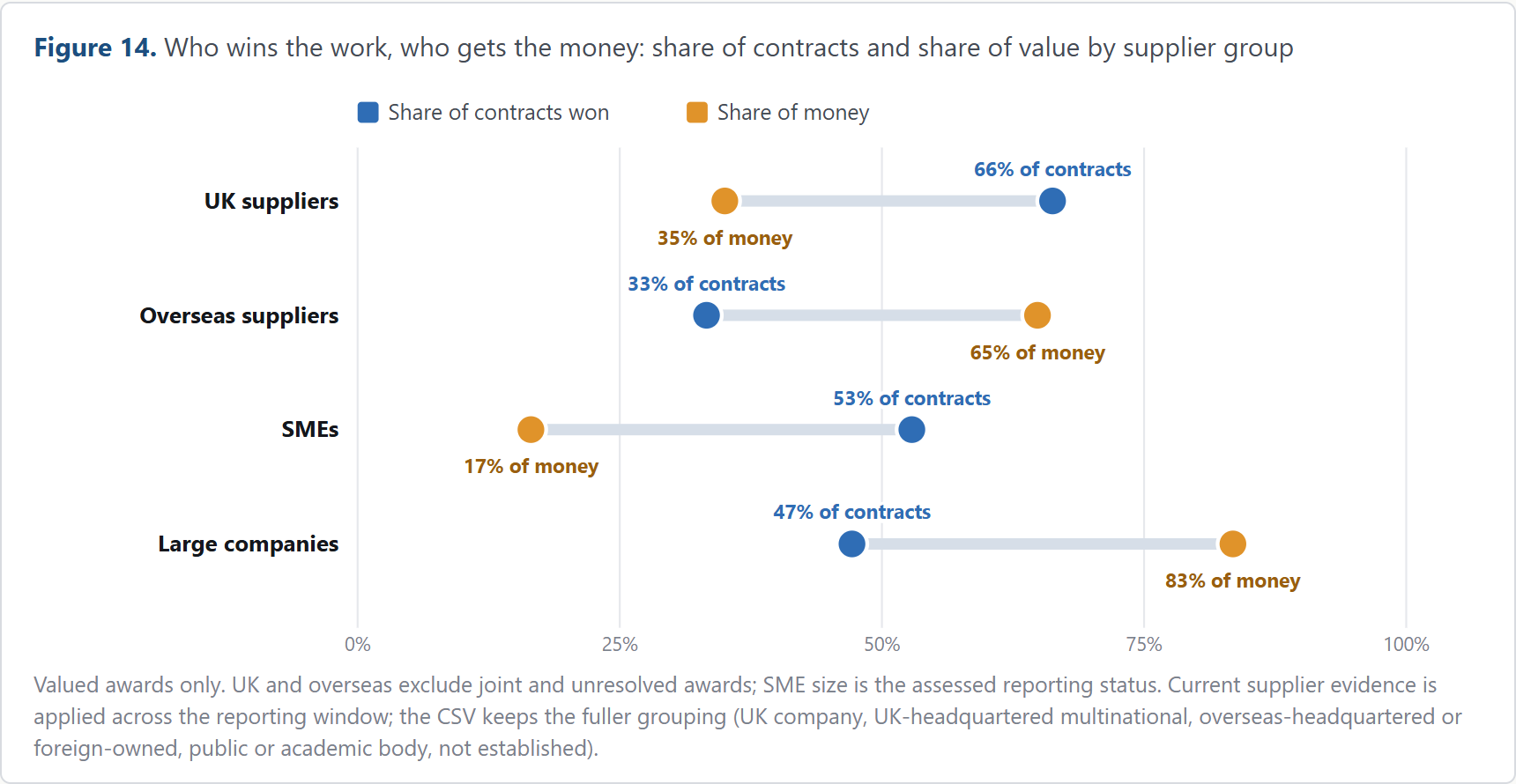
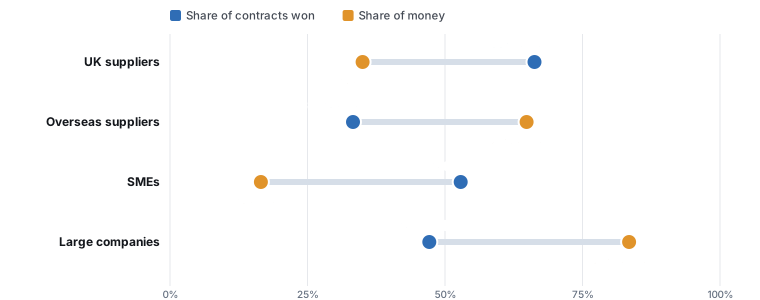
UK suppliers won 66% of awards with a published value and hold 35% of it. Suppliers headquartered overseas or under foreign control won 33% and hold 65%. The same shape appears for size: SMEs won half the contracts and hold a sixth of the money.
Each row sets a group’s share of the 1,506 valued awards against its share of the £1.84bn published value.
Data table
| Supplier group | Valued awards | Share of awards | Published value | Share of value |
|---|---|---|---|---|
| UK suppliers | 998 | 66% | £643.7m | 35% |
| Overseas suppliers | 501 | 33% | £1.19bn | 65% |
| SMEs | 796 | 53% | £303.9m | 17% |
| Large companies | 710 | 47% | £1.53bn | 83% |
Palantir holds a quarter of the money; four contracts carry 42%
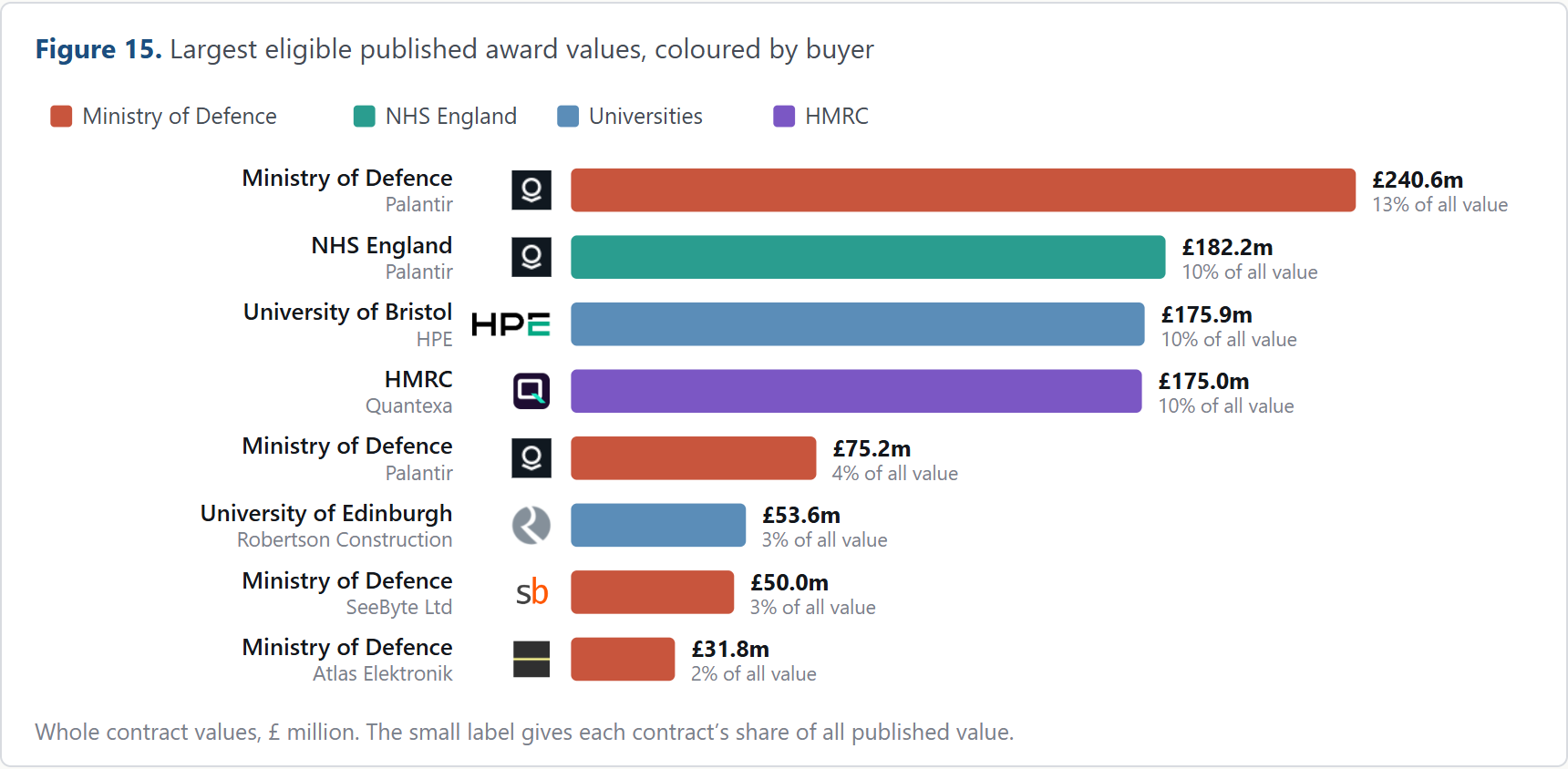
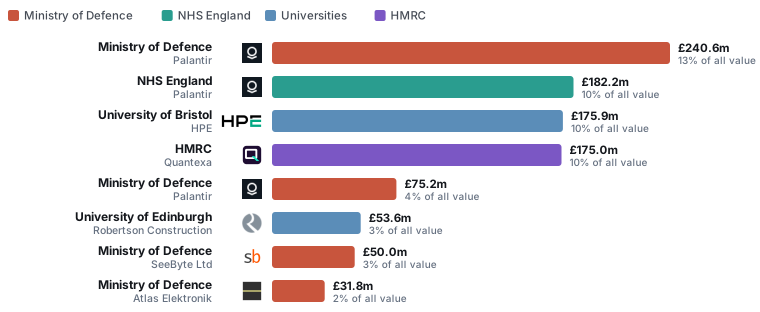
Palantir’s two agreements, the Ministry of Defence enterprise agreement and the NHS Federated Data Platform, come to £422.8m, 23% of all published value, and make it the largest supplier by a wide margin. With the hardware for Bristol’s Isambard-AI and HMRC’s Quantexa deal, four contracts account for 42%. Half of all AI contracts are under £107k, and in five of the six largest buying sectors one contract is most of the sector’s money.
The eight largest AI contracts by whole published value. Together they are 54% of all published AI contract value.
Data table
| Buyer | Supplier | Published value | Share of all AI contract value | Notice |
|---|---|---|---|---|
| Ministry of Defence | PALANTIR TECHNOLOGIES UK, LTD. | £240.6m | 13.1% | Notice |
| NHS England | PALANTIR TECHNOLOGIES UK, LTD. | £182.2m | 9.9% | Notice |
| University of Bristol | Hewlett-Packard Limited (trading as Hewlett-Packard Enterprise) | £175.9m | 9.6% | Notice |
| HM Revenue & Customs | Quantexa Ltd | £175.0m | 9.5% | Notice |
| Ministry of Defence | PALANTIR TECHNOLOGIES UK, LTD. | £75.2m | 4.1% | Notice |
| University of Edinburgh | Robertson Construction | £53.6m | 2.9% | Notice |
| Ministry of Defence | SeeByte Ltd | £50.0m | 2.7% | Notice |
| Ministry of Defence | Atlas Elektronik UK Ltd | £31.8m | 1.7% | Notice |
SMEs win the work, not the value
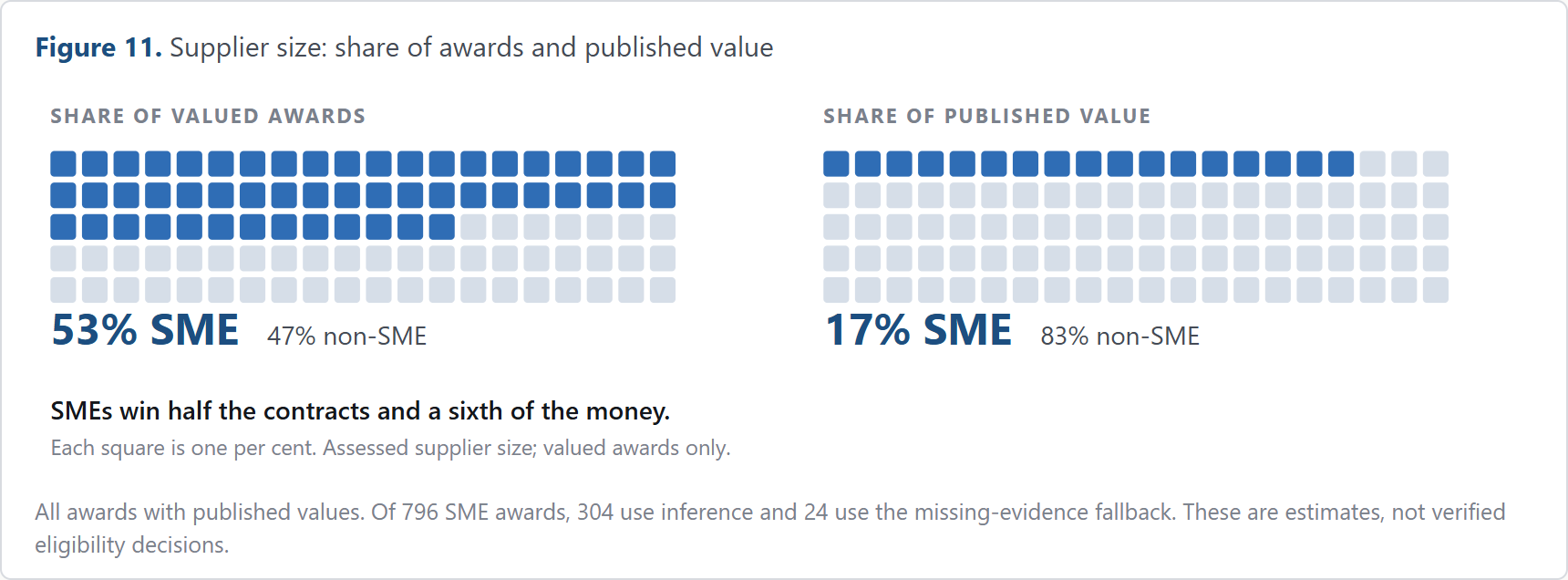
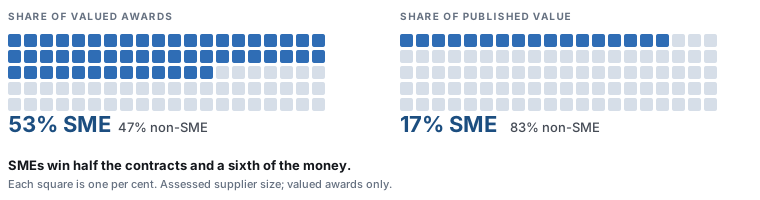
53% of valued awards went to suppliers assessed as SMEs, and they hold 17% of the money. The most frequent winners are specialist SMEs selling the same tool to many councils: transcription, traffic cameras, tenant analytics.
Each square is one per cent. Large companies won 710 valued awards worth £1.53bn, SMEs 796 worth £303.9m.
Data table
| Supplier size | Valued awards | Share of awards | Published value | Share of value |
|---|---|---|---|---|
| Large company | 710 | 47% | £1.53bn | 83% |
| SME | 796 | 53% | £303.9m | 17% |
The data-centre build has started, and Bristol is most of it
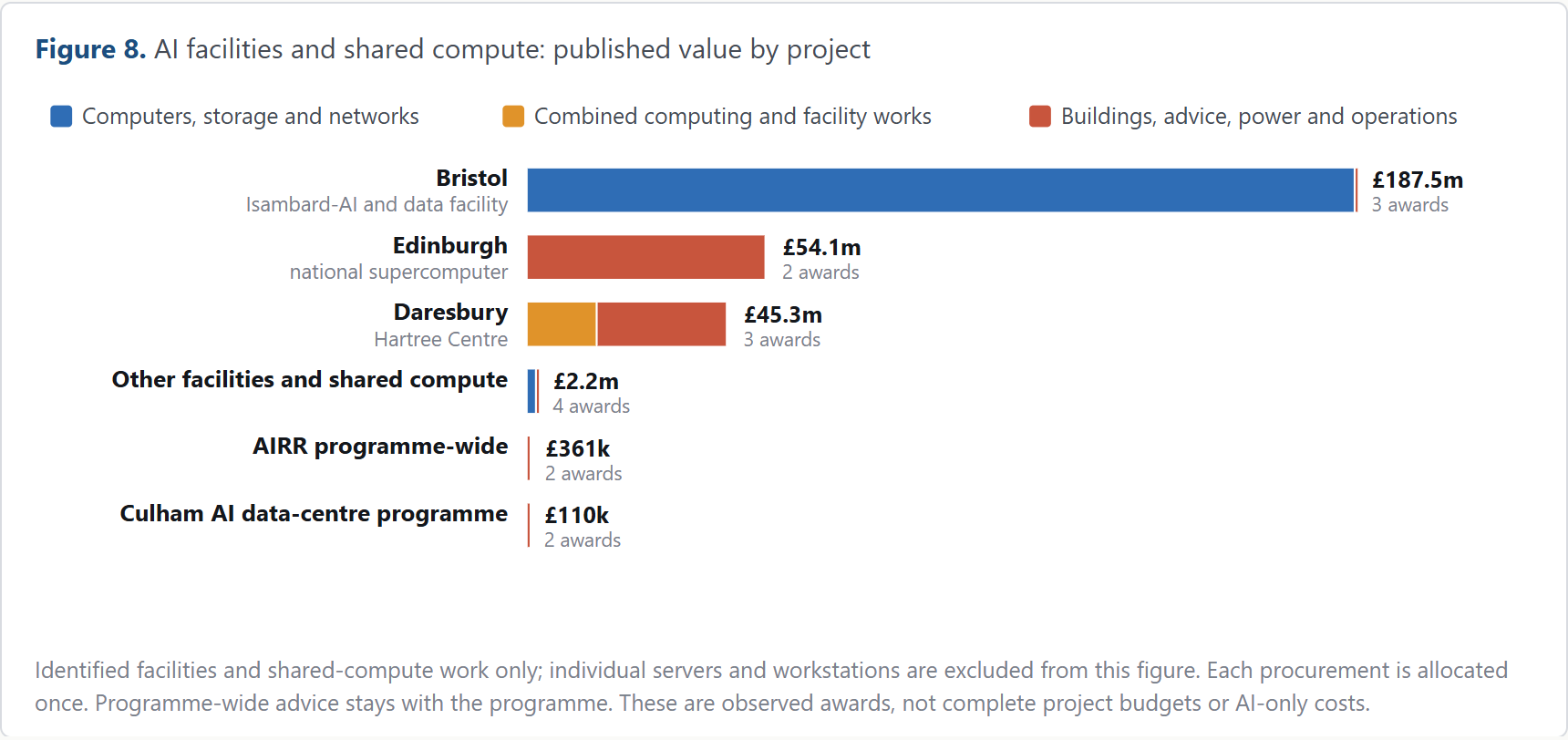
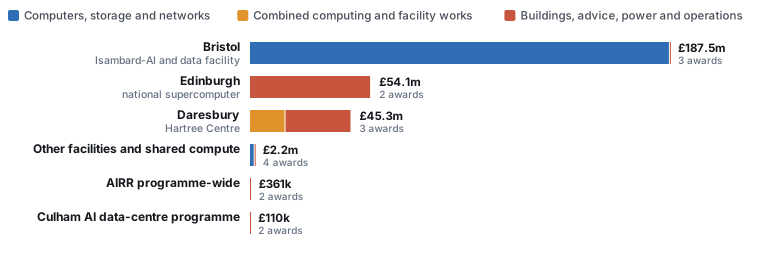
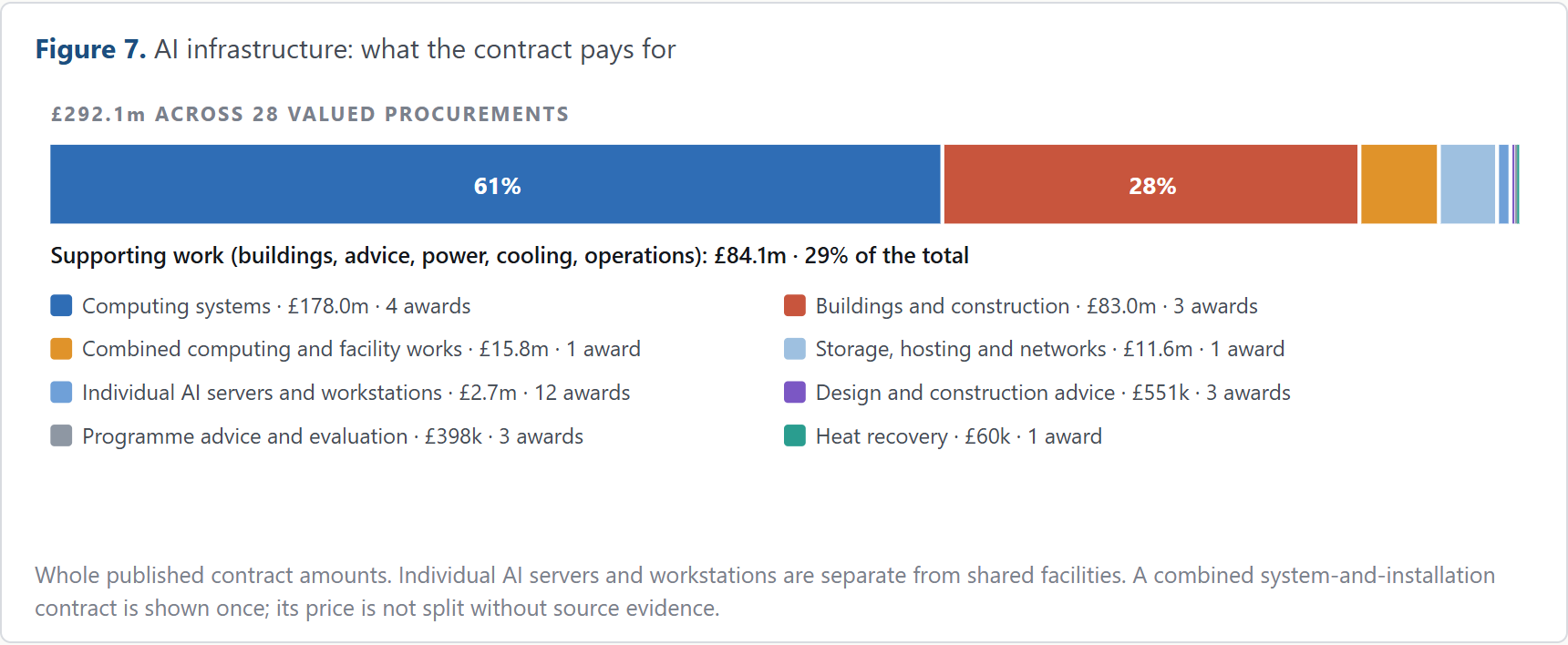
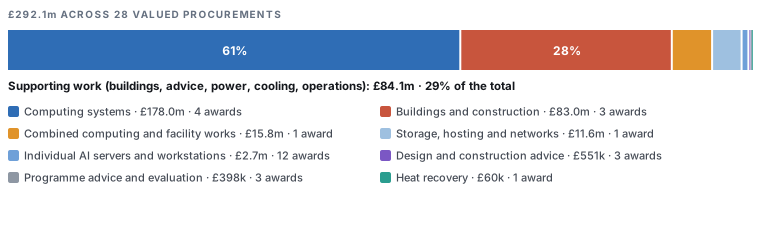
AI computing infrastructure accounts for £292.1m of published value across 28 procurements, and £84.1m of that is not computers: buildings, site preparation, power, cooling and specialist advice. Bristol’s Isambard-AI and its data facility account for £187.5m, almost all of it hardware. Edinburgh’s national supercomputer and the Hartree Centre at Daresbury are the reverse: mostly construction, with the machines still to come.
Bristol: Isambard-AI and data facility, £187.5m. Edinburgh: national supercomputer, £54.1m. Daresbury: Hartree Centre, £45.3m.
Data table
| Project or programme | Valued procurements | Published value |
|---|---|---|
| Bristol: Isambard-AI and data facility | 3 | £187.5m |
| Edinburgh: national supercomputer | 2 | £54.1m |
| Daresbury: Hartree Centre | 3 | £45.3m |
| Other facilities and shared compute | 4 | £2.2m |
| AIRR programme-wide | 2 | £361k |
| Culham AI data-centre programme | 2 | £110k |
Suppliers, buyers and contract sizes
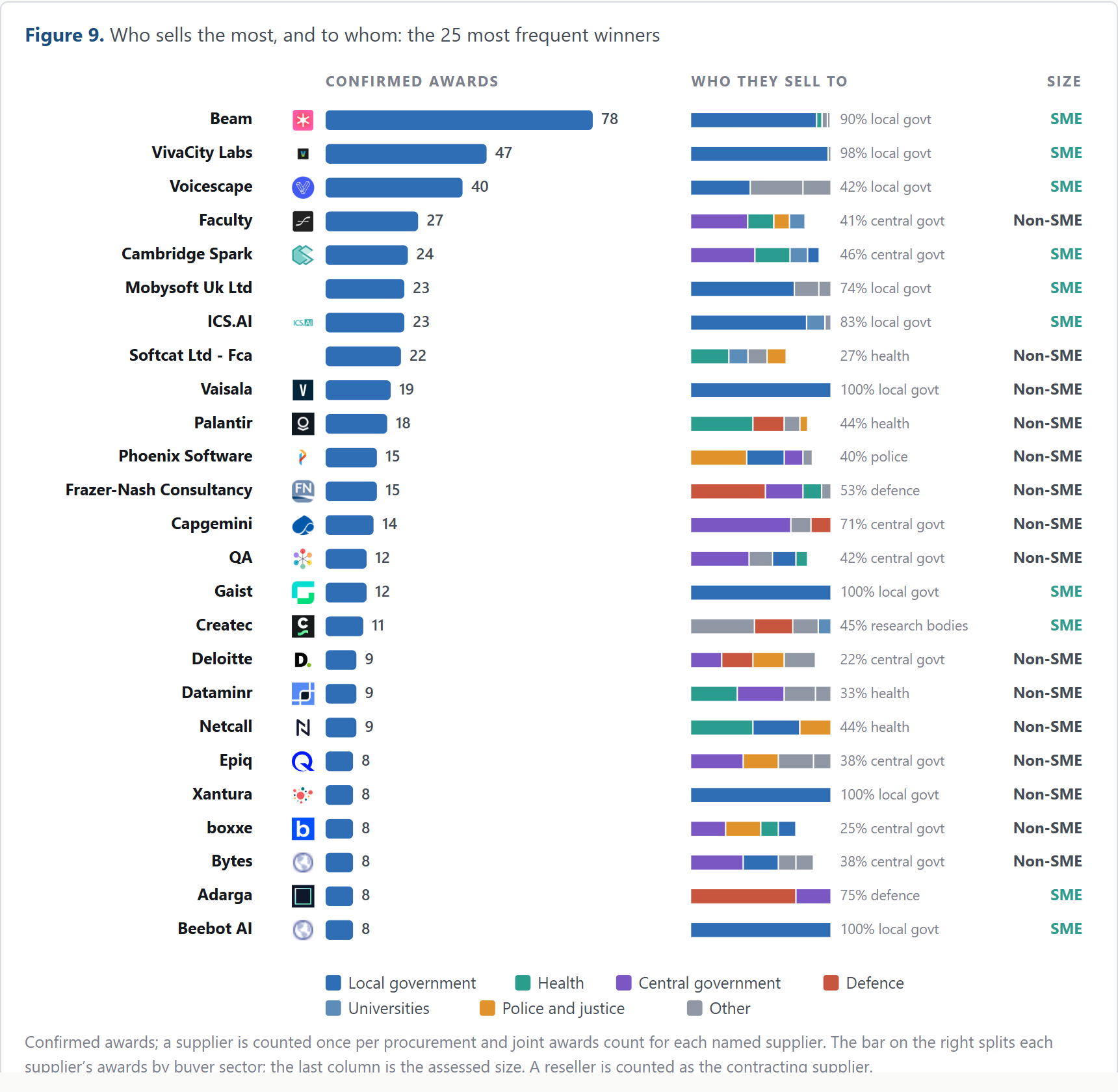
Beam won the most AI contracts (78), then VivaCity Labs (47) and Voicescape (40). Ten of the 25 are SMEs. The coloured bar shows which sectors each supplier sells to.
Data table
| Supplier | Awards | Published value | Main buyer sector | Awards in that sector | Size |
|---|---|---|---|---|---|
| Beam | 78 | £10.6m | Local government | 90% | SME |
| VivaCity Labs | 47 | £4.9m | Local government | 98% | SME |
| Voicescape | 40 | £7.9m | Local government | 42% | SME |
| Faculty | 27 | £28.6m | Central government | 41% | Large company |
| Cambridge Spark | 24 | £6.7m | Central government | 46% | SME |
| Mobysoft Uk Ltd | 23 | £9.4m | Local government | 74% | SME |
| ICS.AI | 23 | £18.9m | Local government | 83% | SME |
| Softcat Ltd - Fca | 22 | £6.4m | Health | 27% | Large company |
| Vaisala | 19 | £2.6m | Local government | 100% | Large company |
| Palantir | 18 | £552.8m | Health | 44% | Large company |
| Phoenix Software | 15 | £2.5m | Police and justice | 40% | Large company |
| Frazer-Nash Consultancy | 15 | £7.4m | Defence and security | 53% | Large company |
| Capgemini | 14 | £33.8m | Central government | 71% | Large company |
| QA | 12 | £7.4m | Central government | 42% | Large company |
| Gaist | 12 | £972k | Local government | 100% | SME |
| Createc | 11 | £2.2m | Research bodies | 45% | SME |
| Deloitte | 9 | £5.6m | Central government | 22% | Large company |
| Dataminr | 9 | £677k | Health | 33% | Large company |
| Netcall | 9 | £873k | Health | 44% | Large company |
| Epiq | 8 | £3.7m | Central government | 38% | Large company |
| Xantura | 8 | £2.2m | Local government | 100% | Large company |
| boxxe | 8 | £1.7m | Central government | 25% | Large company |
| Bytes | 8 | £1.5m | Central government | 38% | Large company |
| Adarga | 8 | £14.9m | Defence and security | 75% | SME |
| Beebot AI | 8 | £1.8m | Local government | 100% | SME |
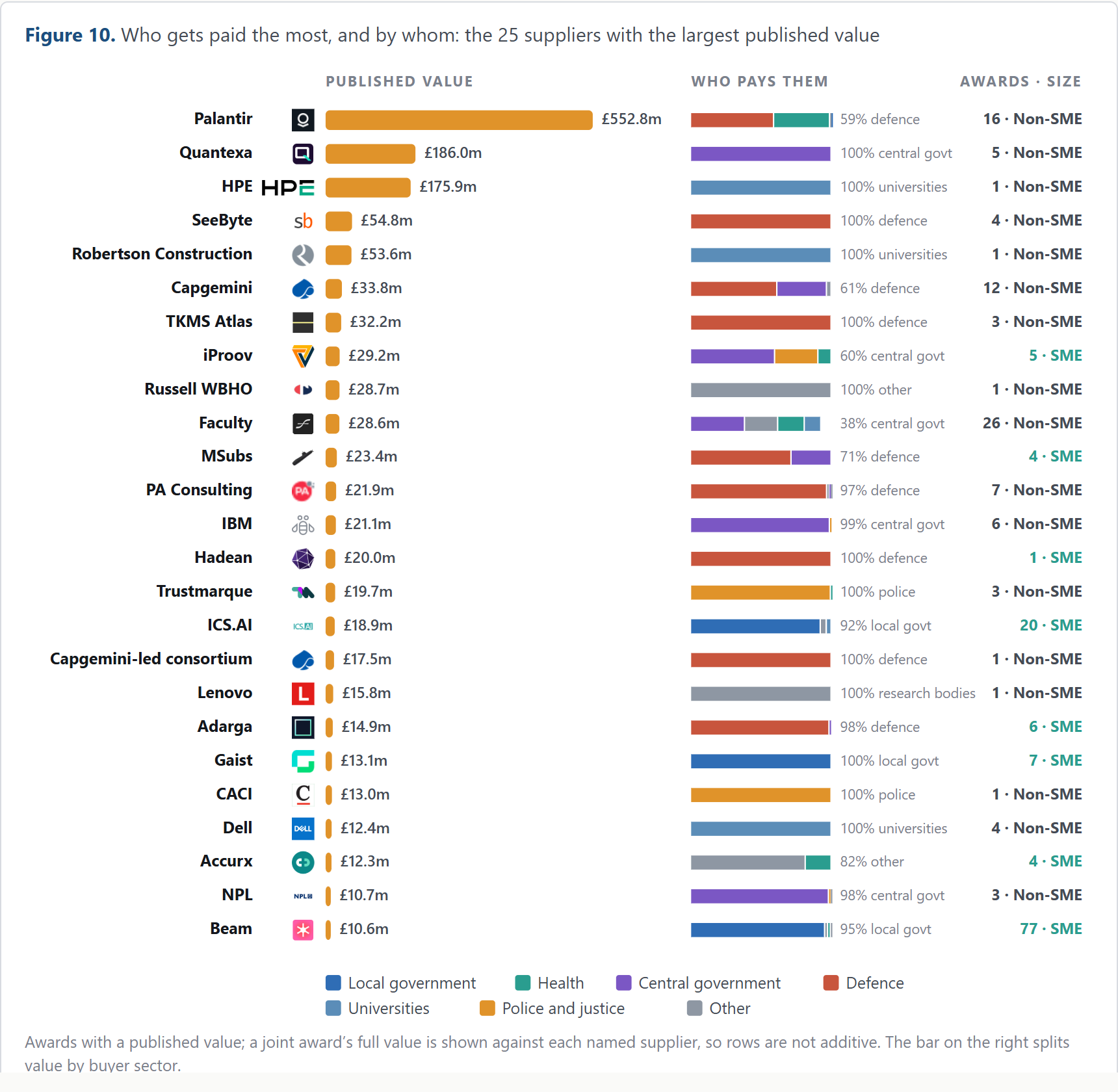
Palantir has the largest published value, £552.8m across 16 awards, then Quantexa (£186.0m) and HPE (£175.9m). The coloured bar shows which sectors pay each supplier.
Data table
| Supplier | Valued awards | Published value | Main buyer sector | Value from that sector | Size |
|---|---|---|---|---|---|
| Palantir | 16 | £552.8m | Defence and security | 59% | Large company |
| Quantexa | 5 | £186.0m | Central government | 100% | Large company |
| HPE | 1 | £175.9m | Education and universities | 100% | Large company |
| SeeByte | 4 | £54.8m | Defence and security | 100% | Large company |
| Robertson Construction | 1 | £53.6m | Education and universities | 100% | Large company |
| Capgemini | 12 | £33.8m | Defence and security | 61% | Large company |
| TKMS Atlas | 3 | £32.2m | Defence and security | 100% | Large company |
| iProov | 5 | £29.2m | Central government | 60% | SME |
| Russell WBHO | 1 | £28.7m | Other | 100% | Large company |
| Faculty | 26 | £28.6m | Central government | 38% | Large company |
| MSubs | 4 | £23.4m | Defence and security | 71% | SME |
| PA Consulting | 7 | £21.9m | Defence and security | 97% | Large company |
| IBM | 6 | £21.1m | Central government | 99% | Large company |
| Hadean | 1 | £20.0m | Defence and security | 100% | SME |
| Trustmarque | 3 | £19.7m | Police and justice | 100% | Large company |
| ICS.AI | 20 | £18.9m | Local government | 92% | SME |
| Capgemini-led consortium | 1 | £17.5m | Defence and security | 100% | Large company |
| Lenovo | 1 | £15.8m | Research bodies | 100% | Large company |
| Adarga | 6 | £14.9m | Defence and security | 98% | SME |
| Gaist | 7 | £13.1m | Local government | 100% | SME |
| CACI | 1 | £13.0m | Police and justice | 100% | Large company |
| Dell | 4 | £12.4m | Education and universities | 100% | Large company |
| Accurx | 4 | £12.3m | Other | 82% | SME |
| NPL | 3 | £10.7m | Central government | 98% | Large company |
| Beam | 77 | £10.6m | Local government | 95% | SME |
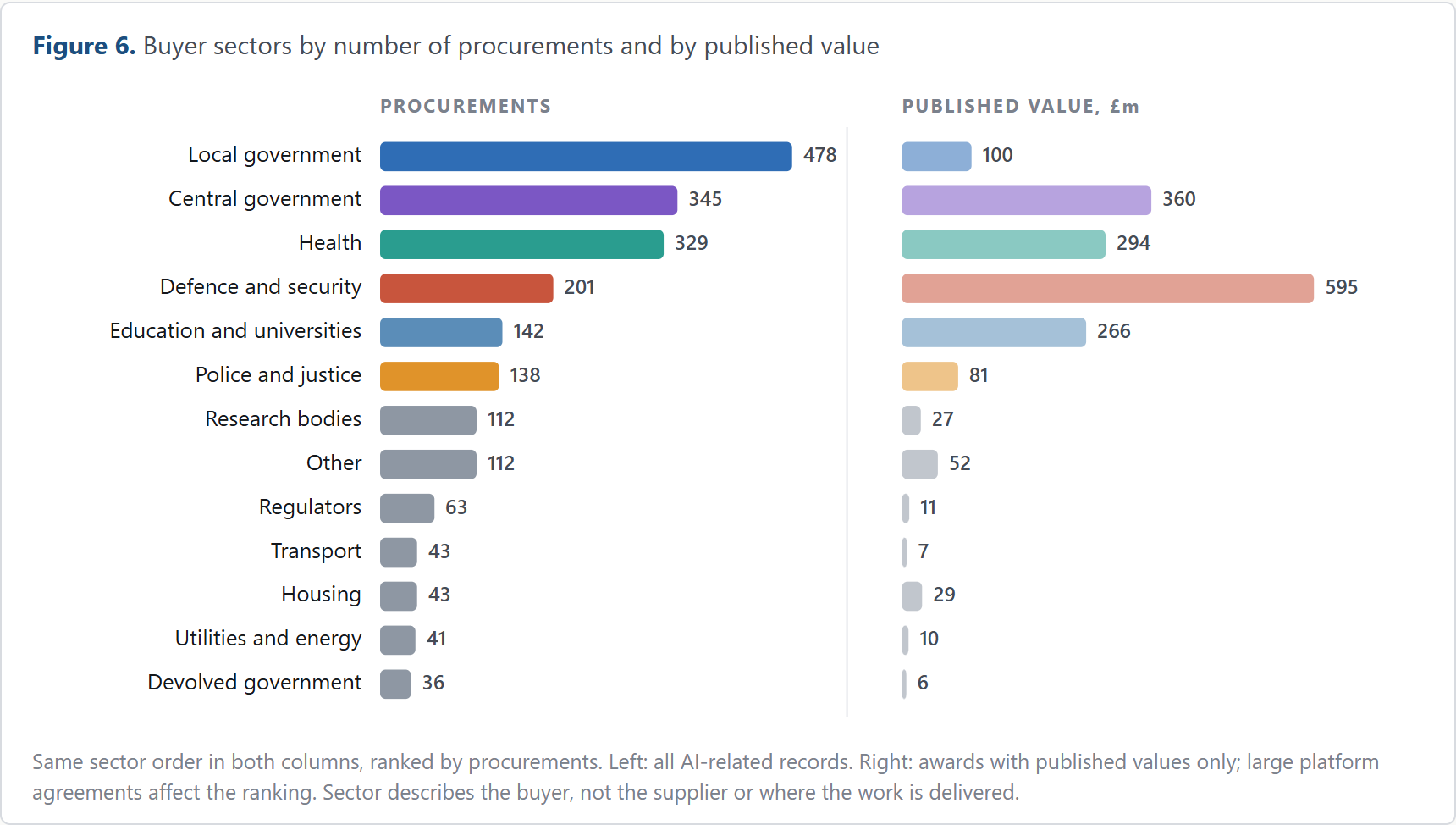
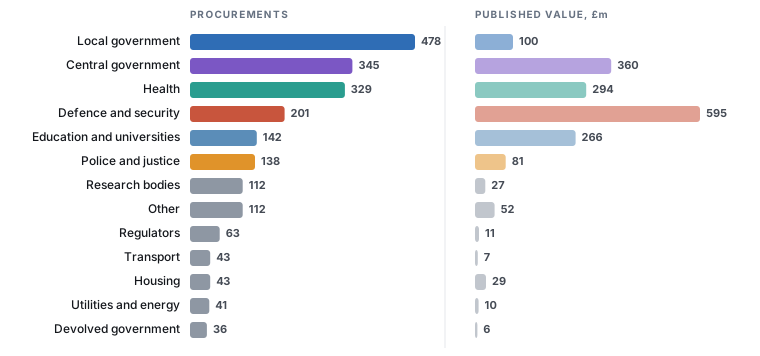
Local government runs the most AI procurements (478) but holds 5% of published value. Defence and security holds the most, £594.9m (32%).
Data table
| Buyer sector | AI-related procurements | Published value |
|---|---|---|
| Local government | 478 | £100.4m |
| Central government | 345 | £360.0m |
| Health | 329 | £293.9m |
| Defence and security | 201 | £594.9m |
| Education and universities | 142 | £266.0m |
| Police and justice | 138 | £81.1m |
| Research bodies | 112 | £27.3m |
| Other | 112 | £51.7m |
| Regulators | 63 | £10.5m |
| Transport | 43 | £7.3m |
| Housing | 43 | £29.1m |
| Utilities and energy | 41 | £9.6m |
| Devolved government | 36 | £6.2m |
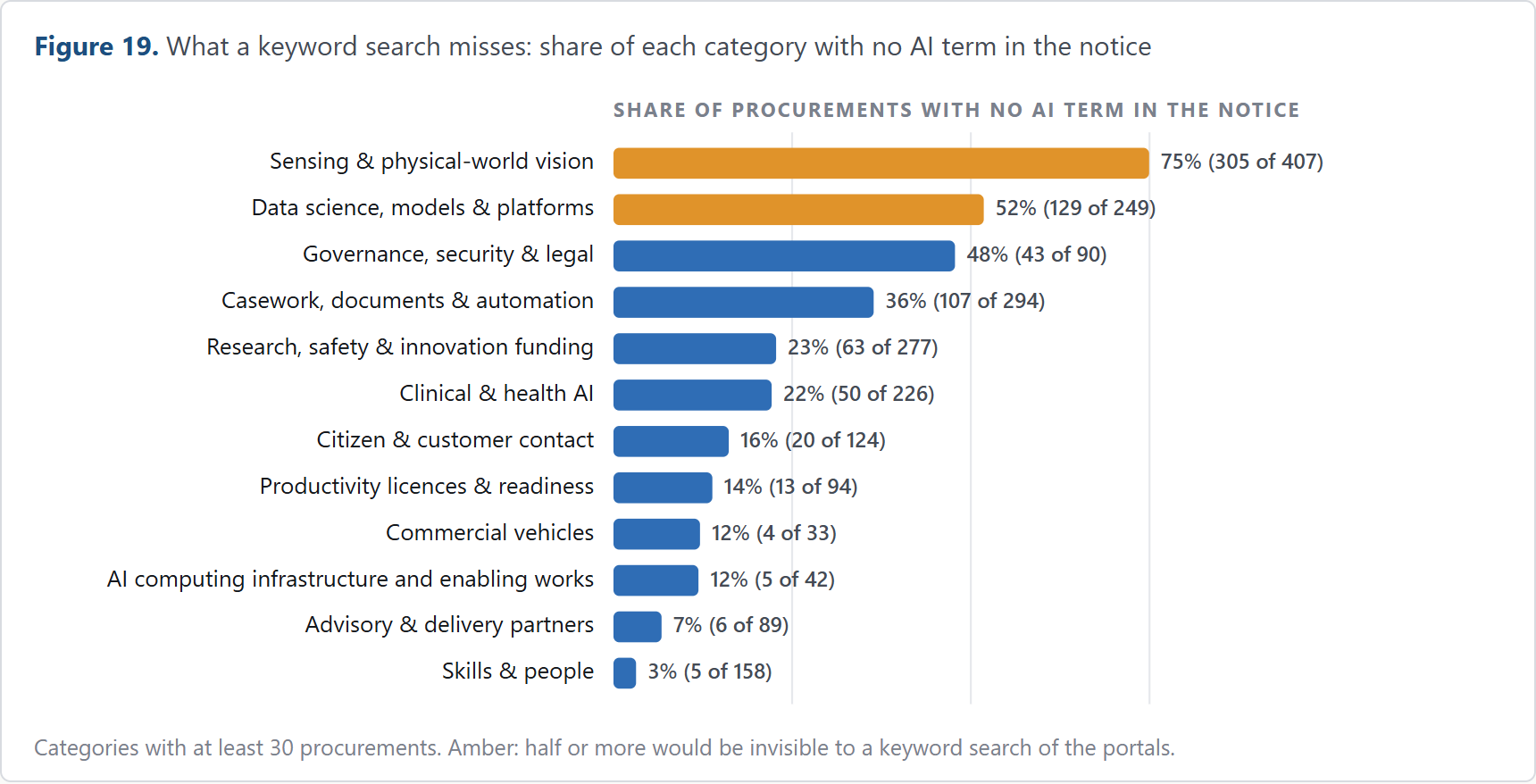
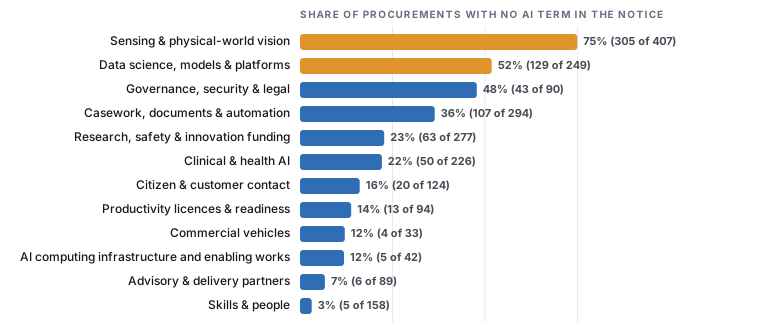
750 of the 2,083 AI-related procurements (36%) never use an AI term, so a keyword search of the portals would not find them. In sensing & physical-world vision the figure is 75%. Amber marks categories where half or more are missed.
Data table
| Category | Procurements | With no AI term | Share missed by a keyword search |
|---|---|---|---|
| Sensing & physical-world vision | 407 | 305 | 75% |
| Data science, models & platforms | 249 | 129 | 52% |
| Governance, security & legal | 90 | 43 | 48% |
| Casework, documents & automation | 294 | 107 | 36% |
| Research, safety & innovation funding | 277 | 63 | 23% |
| Clinical & health AI | 226 | 50 | 22% |
| Citizen & customer contact | 124 | 20 | 16% |
| Productivity licences & readiness | 94 | 13 | 14% |
| Commercial vehicles | 33 | 4 | 12% |
| AI computing infrastructure and enabling works | 42 | 5 | 12% |
| Advisory & delivery partners | 89 | 6 | 7% |
| Skills & people | 158 | 5 | 3% |
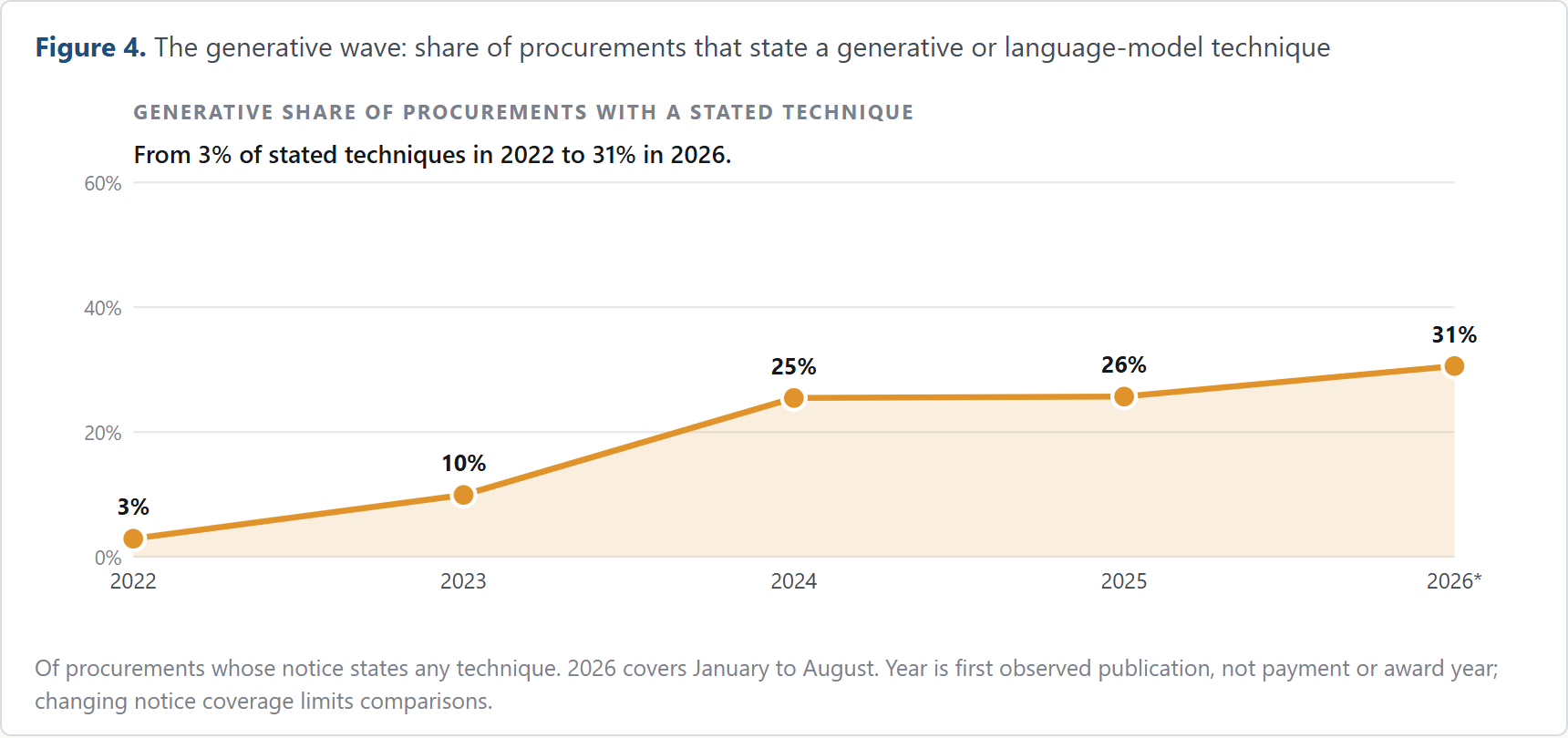
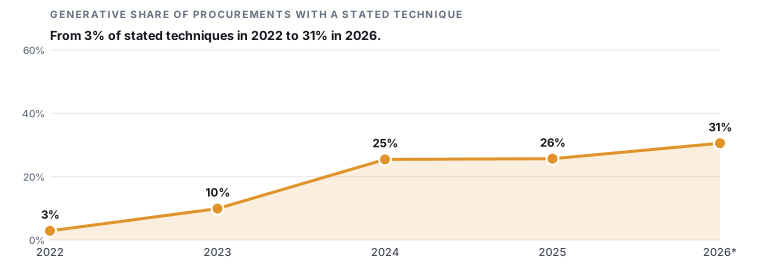
In 2026, 31% of procurements that state a technique name a generative or language-model one, up from 3% in 2022. 2026 covers January to August.
Data table
| Year | Procurements stating a technique | Generative or language-model | Generative share |
|---|---|---|---|
| 2022 | 137 | 4 | 3% |
| 2023 | 141 | 14 | 10% |
| 2024 | 216 | 55 | 25% |
| 2025 | 265 | 68 | 26% |
| 2026 (January to August) | 229 | 70 | 31% |
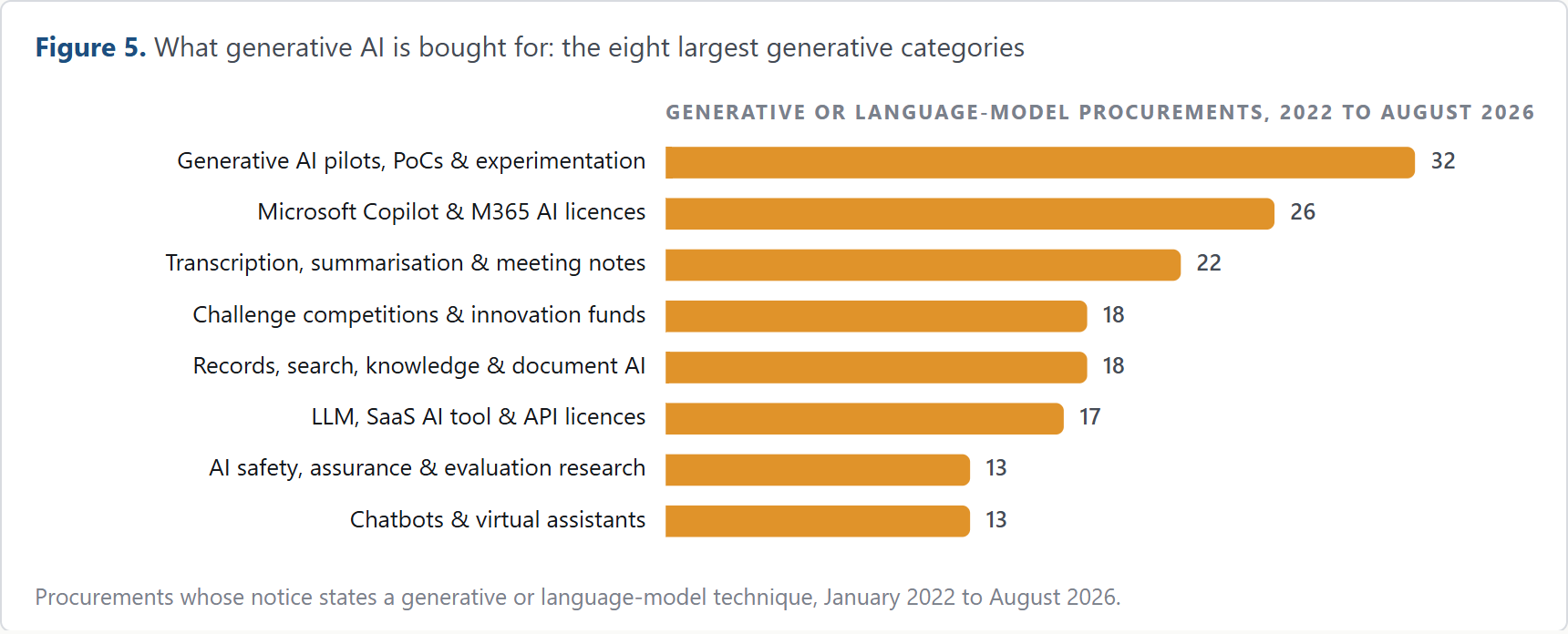
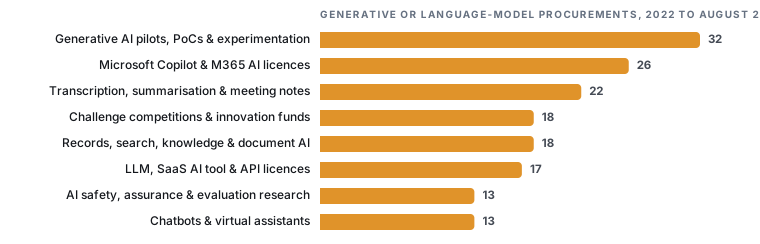
Generative AI pilots, PoCs & experimentation lead with 32, then Microsoft Copilot & M365 AI licences (26) and transcription, summarisation & meeting notes (22).
Data table
| Category | Generative procurements |
|---|---|
| Generative AI pilots, PoCs & experimentation | 32 |
| Microsoft Copilot & M365 AI licences | 26 |
| Transcription, summarisation & meeting notes | 22 |
| Challenge competitions & innovation funds | 18 |
| Records, search, knowledge & document AI | 18 |
| LLM, SaaS AI tool & API licences | 17 |
| AI safety, assurance & evaluation research | 13 |
| Chatbots & virtual assistants | 13 |
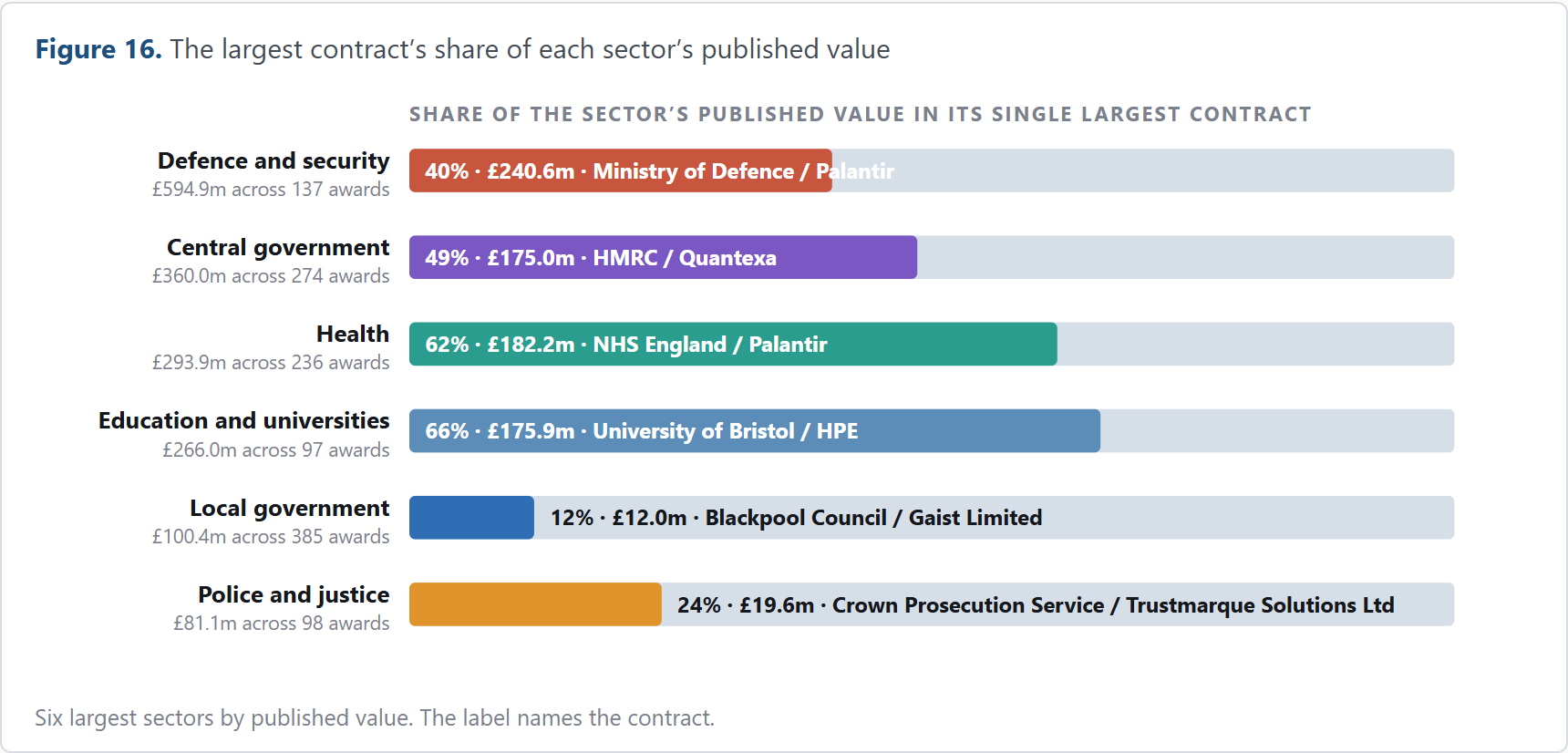
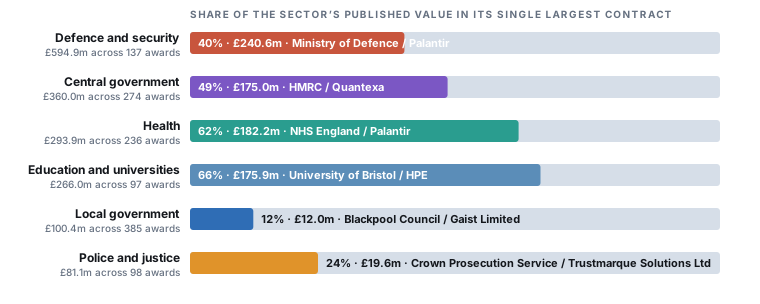
In education and universities, one contract (University of Bristol with HPE) is 66% of the sector’s published value. Local government is the exception, at 12%.
Data table
| Buyer sector | Sector published value | Largest contract: buyer | Supplier | Value | Share of sector value |
|---|---|---|---|---|---|
| Defence and security | £594.9m | Ministry of Defence | Palantir | £240.6m | 40% |
| Central government | £360.0m | HM Revenue & Customs | Quantexa | £175.0m | 49% |
| Health | £293.9m | NHS England | Palantir | £182.2m | 62% |
| Education and universities | £266.0m | University of Bristol | HPE | £175.9m | 66% |
| Local government | £100.4m | Blackpool Council | Gaist Limited | £12.0m | 12% |
| Police and justice | £81.1m | Crown Prosecution Service | Trustmarque Solutions Ltd | £19.6m | 24% |
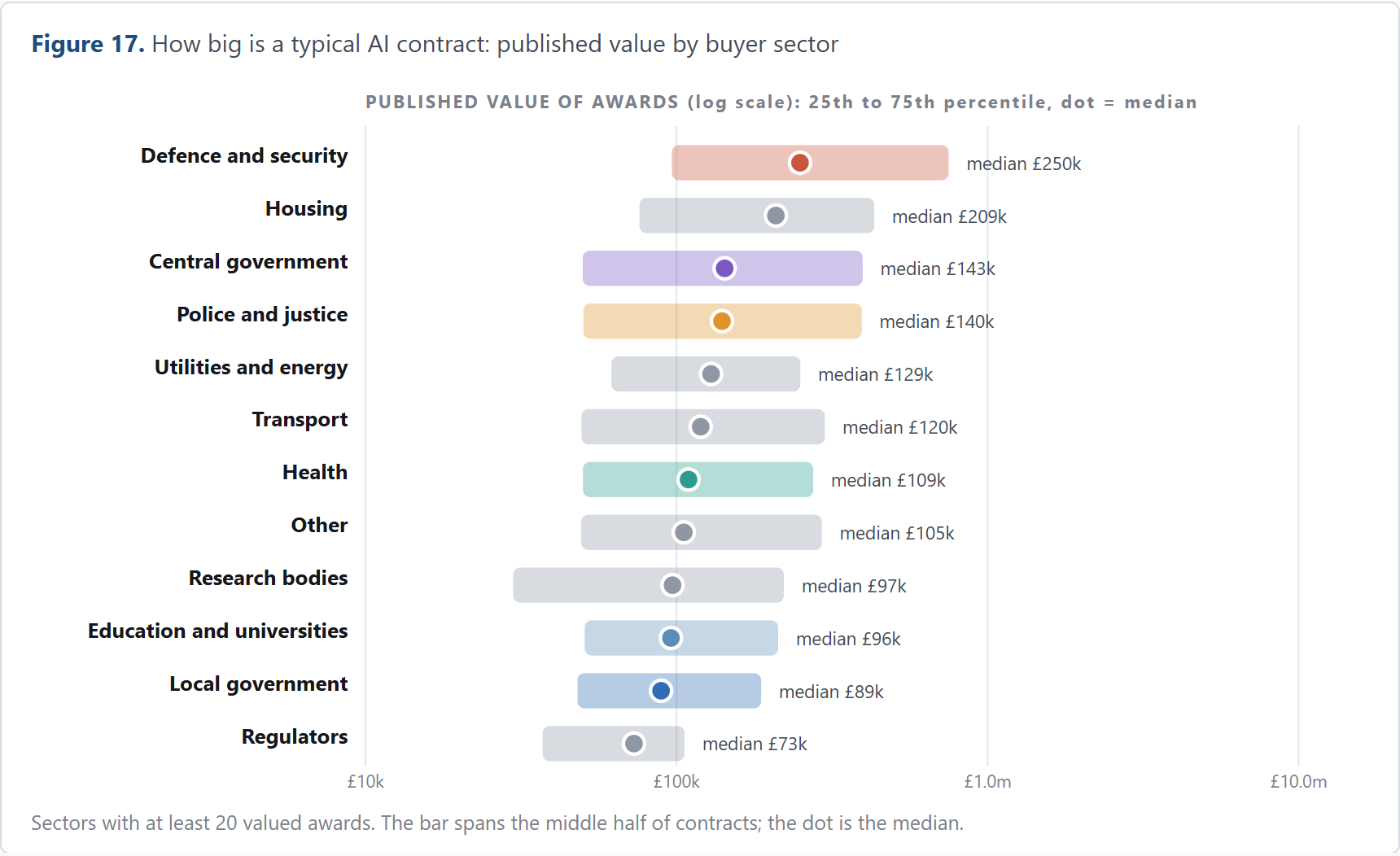
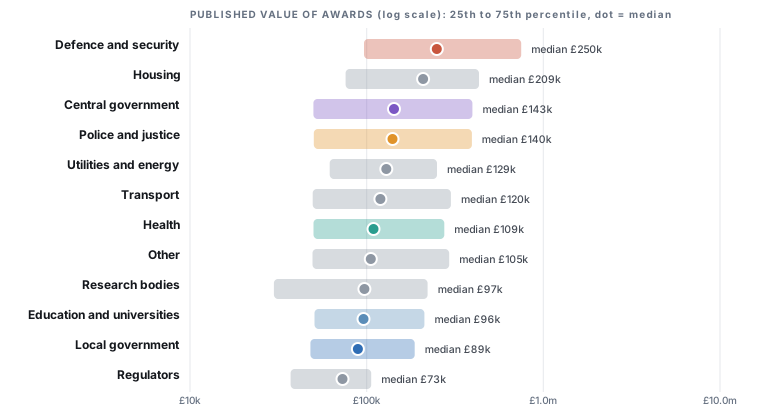
The median AI contract is £250k in defence and security and £73k in regulators. Bars span the middle half of contracts and the dot marks the median.
Data table
| Buyer sector | Valued awards | Lower quartile | Median | Upper quartile |
|---|---|---|---|---|
| Defence and security | 137 | £97k | £250k | £750k |
| Housing | 36 | £76k | £209k | £432k |
| Central government | 274 | £50k | £143k | £397k |
| Police and justice | 98 | £50k | £140k | £394k |
| Utilities and energy | 23 | £62k | £129k | £250k |
| Transport | 25 | £50k | £120k | £300k |
| Health | 236 | £50k | £109k | £275k |
| Other | 58 | £49k | £105k | £293k |
| Research bodies | 62 | £30k | £97k | £221k |
| Education and universities | 97 | £51k | £96k | £212k |
| Local government | 385 | £48k | £89k | £187k |
| Regulators | 57 | £37k | £73k | £106k |
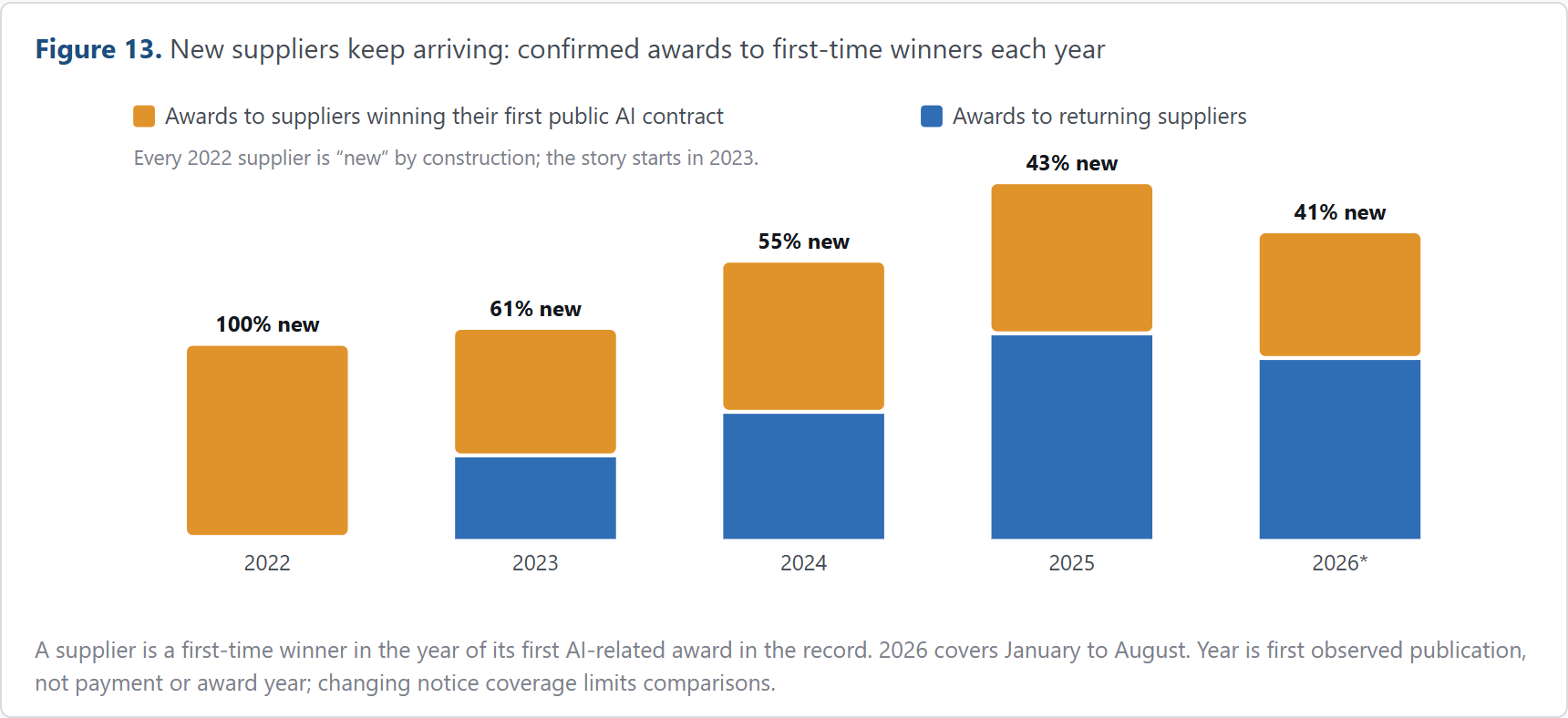
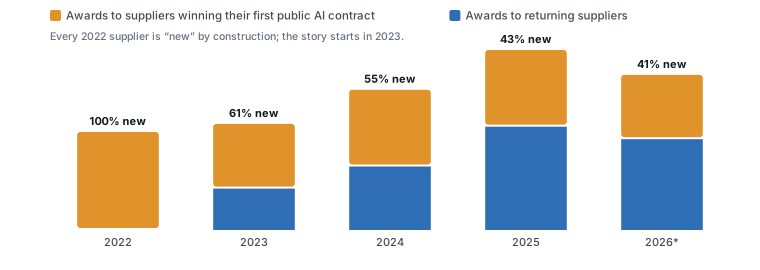
160 awards in 2026 went to suppliers winning their first AI contract in the record, 41% of the year’s awards. 2022 is the first year of the record, so every supplier counts as new.
Data table
| Year | Awards to first-time winners | Awards to returning suppliers |
|---|---|---|
| 2022 | 244 | 0 |
| 2023 | 161 | 103 |
| 2024 | 191 | 158 |
| 2025 | 191 | 257 |
| 2026 (January to August) | 160 | 226 |
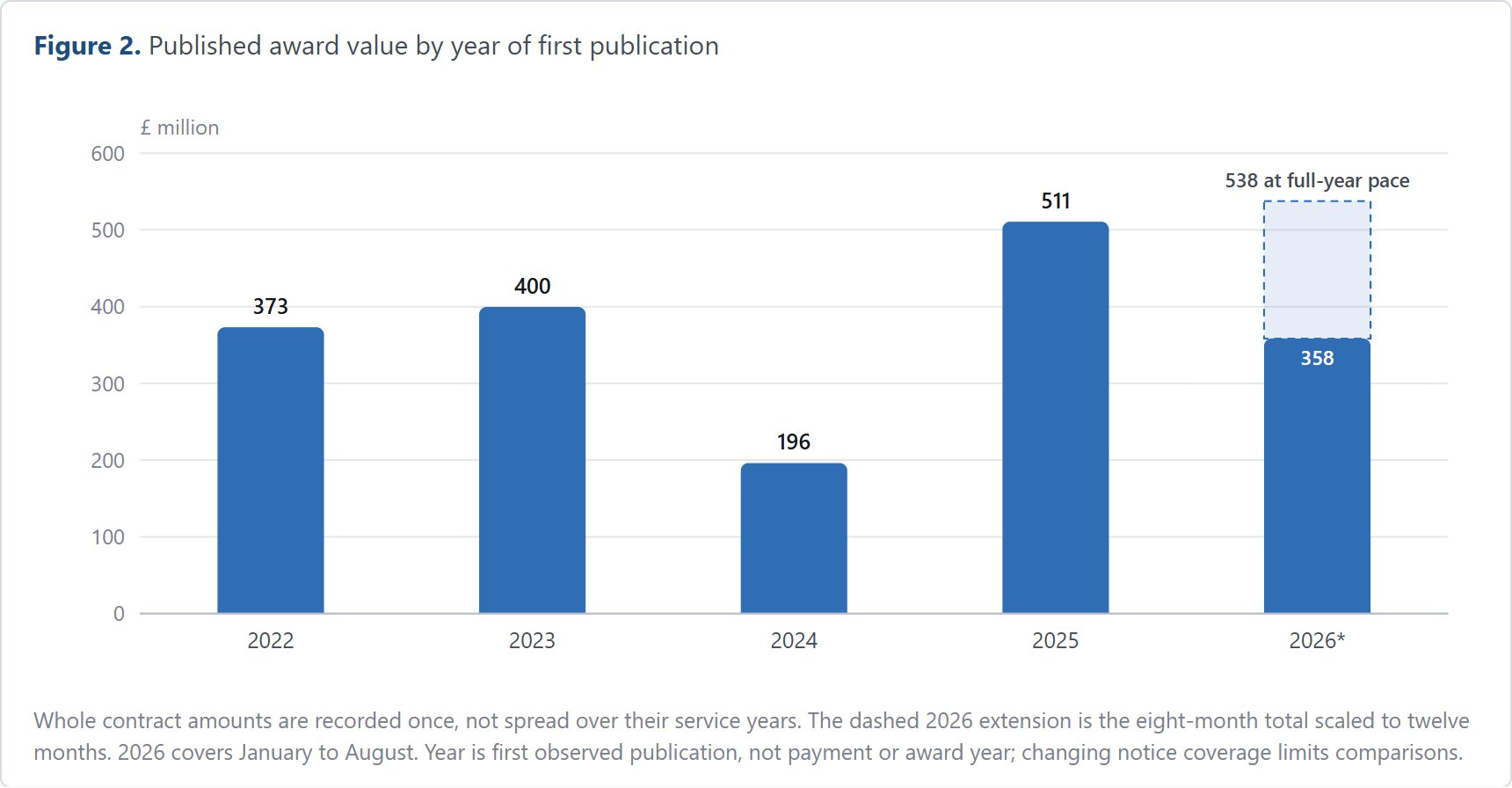
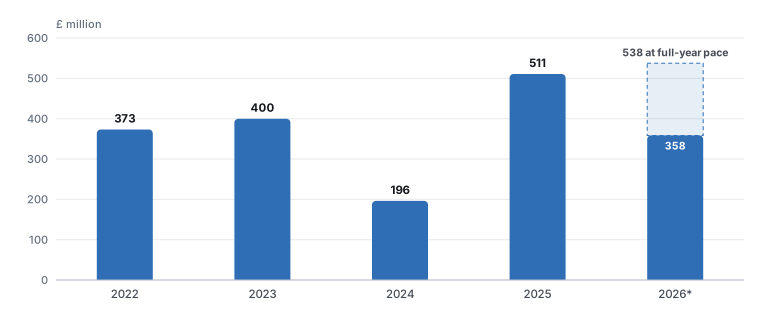
2025 has the highest published value, £510.8m. The dashed 2026 bar scales January to August to a full year.
Data table
| Year | Published value | Valued awards |
|---|---|---|
| 2022 | £373.2m | 178 |
| 2023 | £399.7m | 240 |
| 2024 | £196.1m | 318 |
| 2025 | £510.8m | 415 |
| 2026 (January to August) | £358.4m | 355 |
Computing systems account for £178.0m of AI infrastructure value and buildings and construction for £83.0m.
Data table
| What the contract pays for | Valued procurements | Published value |
|---|---|---|
| Computing systems | 4 | £178.0m |
| Buildings and construction | 3 | £83.0m |
| Combined computing and facility works | 1 | £15.8m |
| Storage, hosting and networks | 1 | £11.6m |
| Individual AI servers and workstations | 12 | £2.7m |
| Design and construction advice | 3 | £551k |
| Programme advice and evaluation | 3 | £398k |
| Heat recovery | 1 | £60k |
UK government AI contracts: questions and answers
How much has the UK public sector spent on AI contracts?
UK public bodies published £1.84bn of AI-related contract awards between January 2022 and August 2026, across 1,506 awards with a published value. This is published contract value, not money paid. Over the same period 616 public bodies published 2,083 AI-related procurements.
How many AI contracts do UK public bodies publish each year?
284 in 2022, 317 in 2023, 424 in 2024 and 570 in 2025. The first eight months of 2026 had 488, a pace of about 732 a year.
Which companies win the most UK government AI contracts?
By number of awards, Beam (78), VivaCity Labs (47) and Voicescape (40). Ten of the 25 most frequent winners are SMEs. By published value, Palantir (£552.8m), Quantexa (£186.0m) and HPE (£175.9m).
How much UK public sector AI money goes to Palantir?
Palantir holds £552.8m across 16 awards with a published value, more than any other supplier. Its two largest agreements, with the Ministry of Defence (£240.6m) and NHS England for the Federated Data Platform (£182.2m), come to £422.8m, 23% of all published AI contract value.
How much UK public AI spending goes to overseas companies?
Suppliers headquartered overseas or under foreign control hold 65% of published AI contract value, £1.19bn, from 33% of valued awards. UK suppliers won 66% of the awards and hold 35% of the value.
Which public bodies buy the most AI?
The Ministry of Defence is the largest buyer by number and by value, with 114 AI-related procurements and £541.0m in published value. Next by number are the Department for Science, Innovation & Technology (103) and the Defence Science and Technology Laboratory (62). Next by value are NHS England (£230.8m) and the University of Bristol (£187.5m). As a sector, local government publishes the most AI procurements, 478.
What kind of AI are UK public bodies buying?
Mostly tools in use. Research and evaluation fell from 22% of AI-related procurements in 2022 to 6% in 2026. The largest categories are sensing & physical-world vision (407), casework, documents & automation (294) and research, safety & innovation funding (277). In 2026, 31% of procurements that state a technique name a generative or language-model one, up from 3% in 2022.
Do SMEs win UK public sector AI contracts?
SMEs win most of the contracts but little of the money. They won 53% of valued awards (796) and hold 17% of published value (£303.9m). Half of all AI contracts are under £107k.
How were the AI contracts identified?
From every notice on Find a Tender, Contracts Finder, Public Contracts Scotland and Sell2Wales. 16,870 candidate procurements were read in full and classified against a written definition of AI-related work. 750 of the 2,083 included procurements (36%) never use an AI term, so a keyword search of the portals would miss them.
How should this report be cited?
White, S. (2026) Artificial intelligence in UK public procurement, 2022 to 2026. BidSkim Research, Procurement Data Series No. 1. Version 2026-09-15. Available at: https://bidskim.com/research/ai-in-uk-public-procurement-2022-2026. The report, figures and dataset are published under a Creative Commons Attribution 4.0 licence.
How the AI contracts were identified
A procurement counts as AI-related when the thing bought is or depends on a machine-learning, language-model, speech, vision or autonomy capability; when AI is the subject of the work; or when the purchase provides computing for AI. Anything a looser definition would sweep in is kept in the dataset as adjacent and excluded from every figure.
- The record. 581,864 procurements: every notice on Find a Tender, Contracts Finder, Public Contracts Scotland and Sell2Wales from September 2021 to August 2026, collected daily and grouped so one purchase is counted once.
- Retrieval. Plain-language descriptions of 44 kinds of AI work were matched against every notice, alongside AI terms, product names and a list of suppliers whose only product is AI. 16,870 candidates were read in full. 750 of the 2,083 included procurements never use an AI term.
- Classification. Each candidate was read by Claude Opus 5 under the fixed definition and rule set, at least three times, and the author ruled on boundary cases. Every kept row carries a quoted evidence string and a source link.
- Value. Awarded contracts with a published amount, taken from the award notice. Framework ceilings, unpublished call-offs and awards with no stated value are excluded rather than estimated, so the total is a minimum.
Download the data and cite the report
The report, the figures and the chart tables are free to download. The full row-level CSV, with every procurement, its category, value basis, evidence string and source link, is available on request with a work or education email, together with the per-buyer table, supplier assessments and evidence pack. A short script reproduces every published total from the CSV.
Briefings, interviews and data for local or trade coverage: [email protected]. Corrections to [email protected] with the procurement ID and source PAGE_URL. Material changes get a new version and a correction note.